


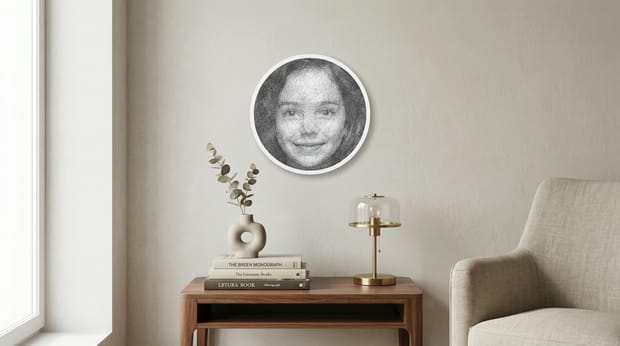
There is something quietly powerful about seeing a meaningful photo turned into something you can actually make with your hands. In a time when so much of our visual life stays on screens, personalized wall art offers a different kind of connection. It gives a memory weight, texture, and presence.
That is part of what makes a string art generator so appealing. Instead of simply applying a visual effect to an image, it helps turn a personal photo into the plan for a real handmade project. With the Spatar String Art Generator, a portrait, a pet photo, or a picture of two people can become the basis for a structured thread design that later turns into a physical piece of art.
For many people, that combination is especially compelling: the emotion of a personal image, the clarity of a digital preview, and the satisfaction of creating something tangible from it.
Why personalized wall art feels different
Generic decoration can make a room look finished, but personal decoration often makes it feel lived in. A framed print from a shop may fit the color palette, yet it rarely carries the same emotional value as something connected to a real memory.
That is why photo-based creative projects have such lasting appeal. They do more than fill an empty wall. They mark a relationship, a shared moment, a family story, or a beloved animal that matters to someone. A handmade piece based on a real photo feels less like decoration and more like a visual memory with presence.
This is also where personalized string art stands apart. It has the warmth of a handmade object, but it begins with something very specific: your own image. The result is not random or purely decorative. It starts with a face, a silhouette, an expression, or a moment you already care about.
Why photo-based string art is so appealing
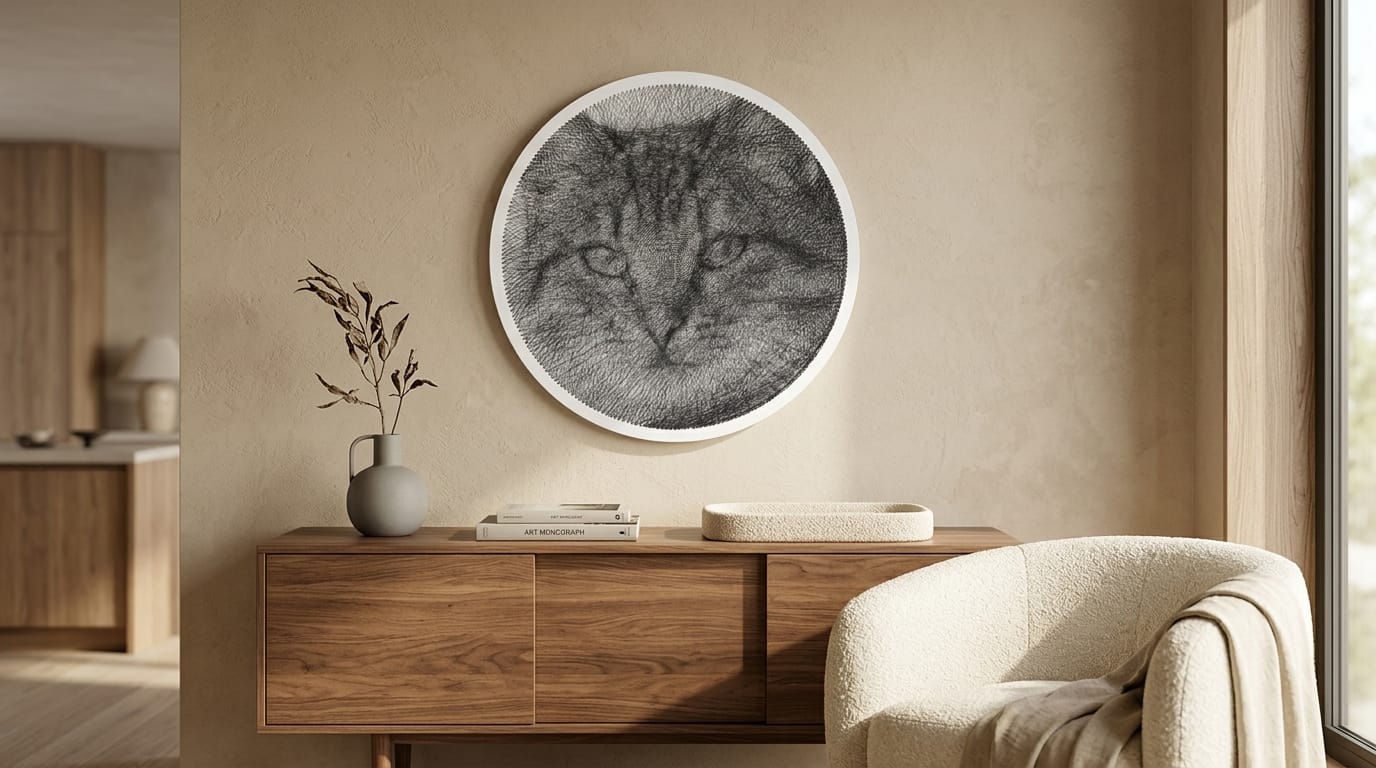
Some creative formats work especially well with personal photos, and string art is one of them. Portraits, couple photos, family images, and pet pictures often translate beautifully because they rely so much on contrast, outline, shadow, and recognisable shape.
A good photo to string art design does not need every tiny detail. In many cases, what matters most is the overall structure of the image: the shape of a face, the line of the shoulders, the position of the eyes, the contrast between light and dark. String art has a way of simplifying an image while still keeping its emotional identity intact.
That is why this kind of project often appeals to people looking for a meaningful gift or a personal home piece. A wedding photo, a child’s portrait, a dog’s face, or a picture of a couple can all become the starting point for something both decorative and deeply individual.
It is also part of the reason DIY string art from photo feels more special than many other craft projects. You are not just making a pattern. You are interpreting a memory.
What a string art generator actually does
In simple terms, a string art generator takes a photo and translates it into a thread-based visual plan. It helps convert the important light and dark areas of the image into a composition that can work as string art.
That matters because string art is not just drawing with thread. It has structure. The final piece depends on the way lines interact, overlap, and build tone through repetition. What looks soft or detailed in a photo has to be reimagined in a very different visual language.
This is why the generator is not just an effect filter. It is a planning step for a real DIY project. The goal is not simply to make a picture look artistic on screen. The goal is to create a usable string art preview that becomes the foundation for the handmade result later on.
With Spatar, the process begins when the user uploads a photo. If needed, the image can be adjusted before generation. Then the system starts building the preview. During this stage, the interface lets the user know that generation will take around 2–5 minutes and asks them not to close the page until the image is loaded.
That waiting period is not just a technical pause. It is part of the experience.
How a photo becomes a thread-based composition
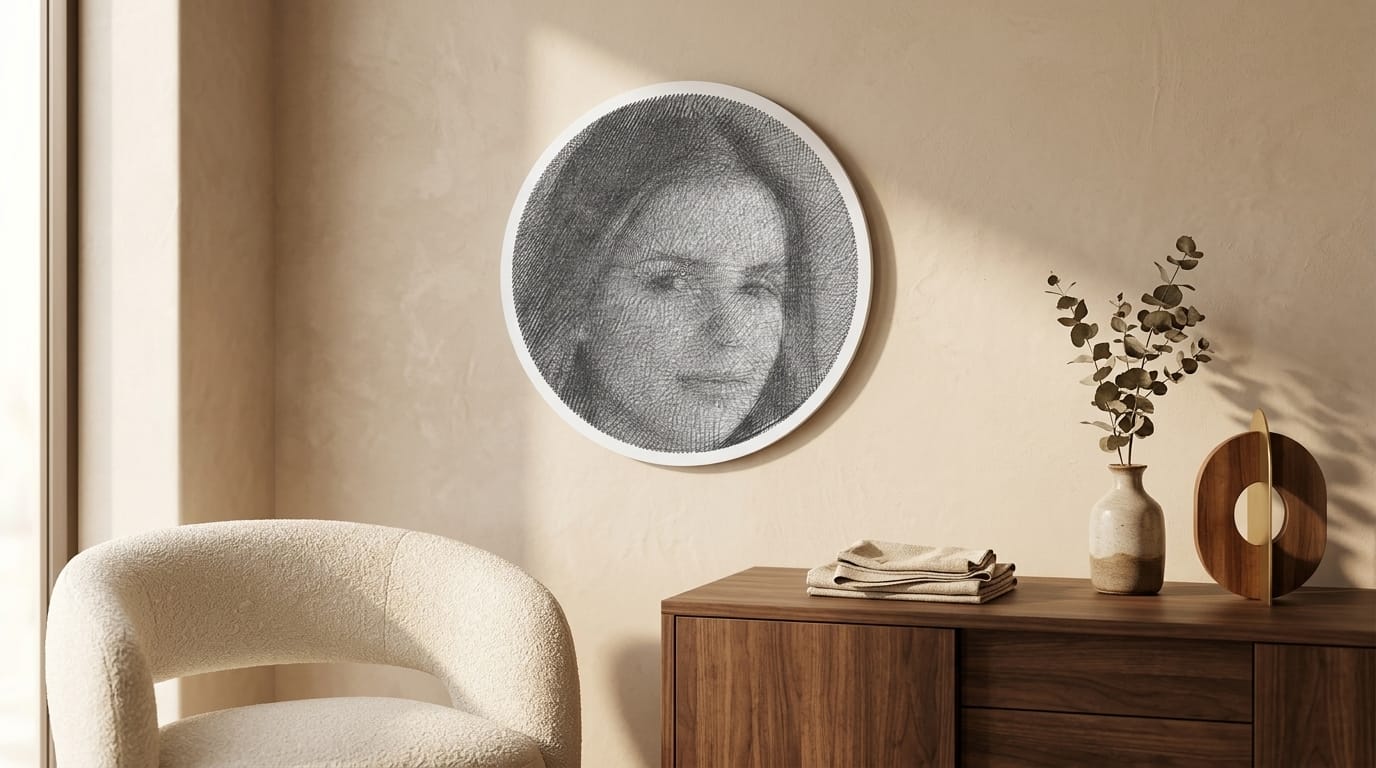
One of the most fascinating things about the process is how a familiar image changes while still remaining recognisable. A normal photo contains color, texture, and countless visual details. Thread art works differently. It relies on direction, density, and contrast.
So when the generator begins, it is effectively reorganising the image into a form that can later be recreated through thread. Instead of thinking like a camera, it starts thinking like a handmade composition.
That shift is what makes the final preview so satisfying to see. The image no longer looks like an ordinary photo, but it is still clearly yours. It becomes a structured design with rhythm and form, ready to guide the making process.
For people discovering string art generator tools for the first time, this is often the moment when the idea really clicks. The project becomes real. What began as a digital upload now looks like something you can imagine on a wall, made by hand.
Why the generation phase adds excitement
There is a particular kind of anticipation in waiting for a personal image to be transformed. The generation process takes about 2–5 minutes, which is long enough to feel that something substantial is happening, but short enough to remain part of the creative flow.
That moment matters because it creates a pause between choosing a photo and seeing it reinterpreted. Instead of instant decoration, there is a brief sense of suspense. You already know the image, but you do not yet know how it will look as thread art.
In a way, that is part of the charm. The waiting phase gives the project emotional momentum. You are not simply clicking through a tool. You are watching a memory move toward a new form.
And when the generated image finally appears, it often feels more rewarding because of that short delay. The preview is not just a picture on a page. It is the first visual proof that the chosen photo can truly become a handmade piece.
Why the preview gives people confidence before they begin
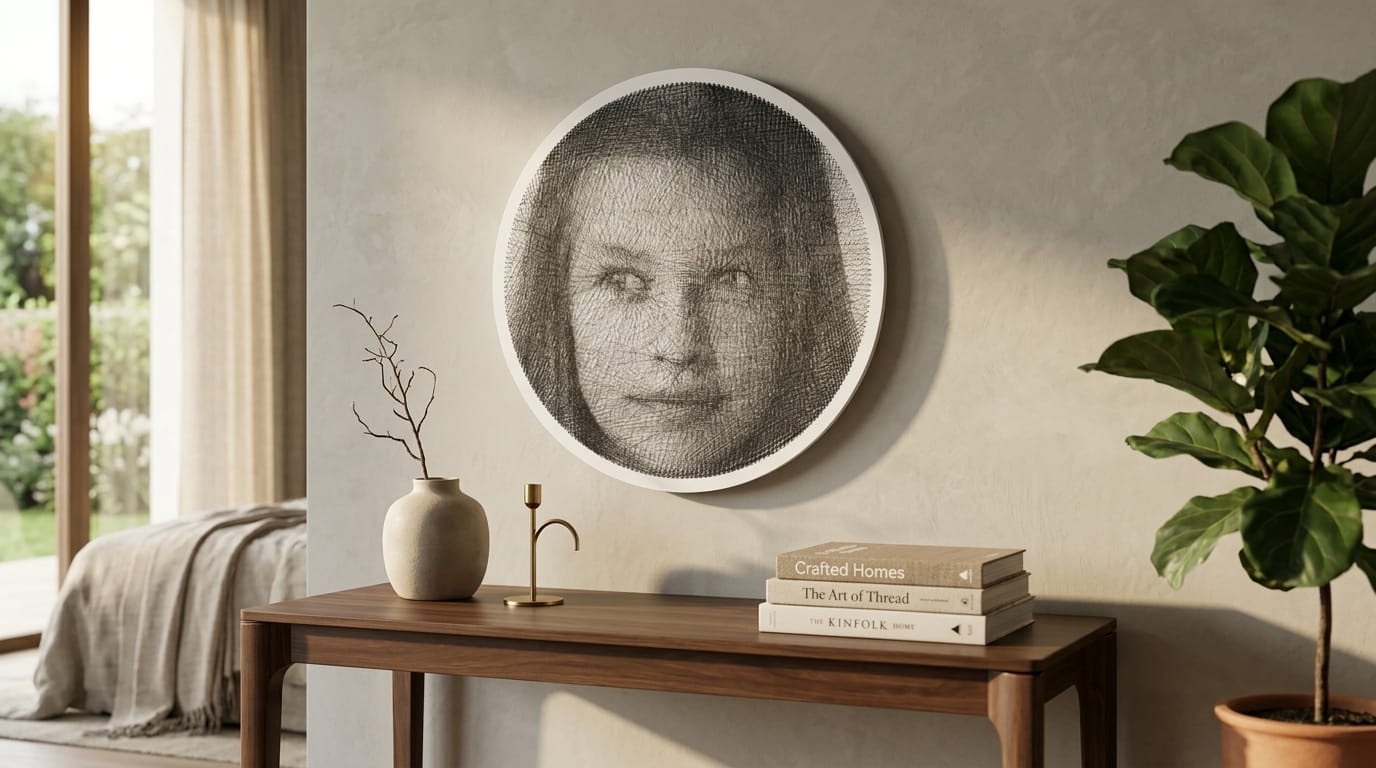
Creative projects are exciting, but they can also feel uncertain. Many people like the idea of making something by hand, yet hesitate because they cannot easily imagine the final result.
That is where the string art preview becomes especially useful. Before beginning the physical project, the user can see how the chosen image translates into thread art. They can save the image and continue to the instructions with a much clearer idea of what they are making.
This makes the whole process more accessible. Instead of asking someone to commit blindly to a DIY project, the generator shows them the visual direction first. It offers reassurance without taking away the handmade aspect.
For beginners, that confidence can make all the difference. For more experienced makers, it is simply a satisfying part of planning. In both cases, the generator bridges the gap between idea and action.
The included video makes the process easier to understand
This article also includes a video showing the generation process, which is especially helpful for anyone who wants to see what happens between photo upload and final preview.
Reading about the process is one thing; watching it unfold is another. The video makes the transition from image to generated design much easier to understand because it shows the actual sequence: uploading the photo, waiting during the generation stage, and then seeing the completed preview appear.
That visual step is useful because it reinforces an important point: the tool is not applying a quick decorative overlay. It is creating the structured basis for a real string art project. The video helps readers see that the generated result is part of a broader handmade process, not just a screen effect.
For anyone curious about how photo to string art works in practice, that makes the article more tangible and easier to follow.
Where technology and handmade creativity meet
What makes this process so appealing is not only the finished look. It is the balance between personal memory, digital planning, and physical making.
A string art generator gives shape to an idea that might otherwise stay abstract. It helps turn a photo into a structured visual plan, offers a preview before the work begins, and makes a detailed DIY project feel more approachable. At the same time, it does not replace the handmade element. The final piece still depends on patience, attention, and the pleasure of making something step by step.
That is why this kind of project feels more meaningful than a simple image filter and more personal than mass-produced decor. A familiar photo becomes a carefully prepared design. The design becomes a handmade object. And the finished object becomes part of a home, carrying both the original memory and the work that brought it into a new form.
In that sense, the Spatar generator is not just a digital convenience. It is the first stage of a creative process that connects technology with craft, and memory with material form.