

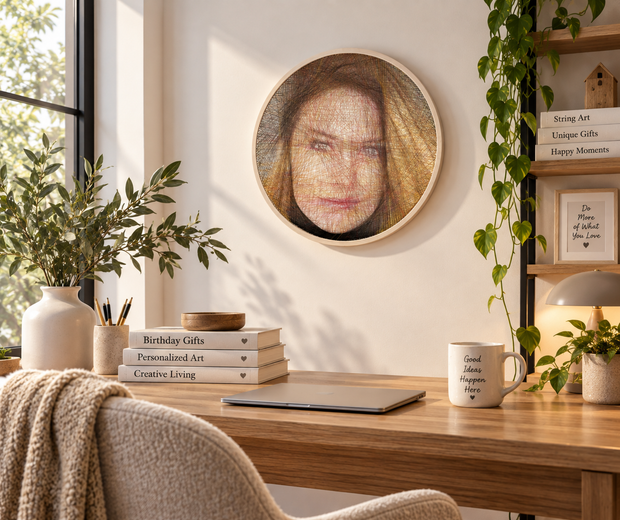
Turning a photograph into String Art is already an unusual idea. Instead of printing an image or painting it onto a surface, you recreate it using hundreds or even thousands of straight thread lines stretched between nails.
Most photo-based String Art is monochrome. A dark thread, usually black, gradually builds the image through different levels of density. Where more lines overlap, darker areas appear. Where fewer threads cross, the wooden background remains more visible.
At SPATAR, we have been experimenting with what happens when another element is added to this process: color.
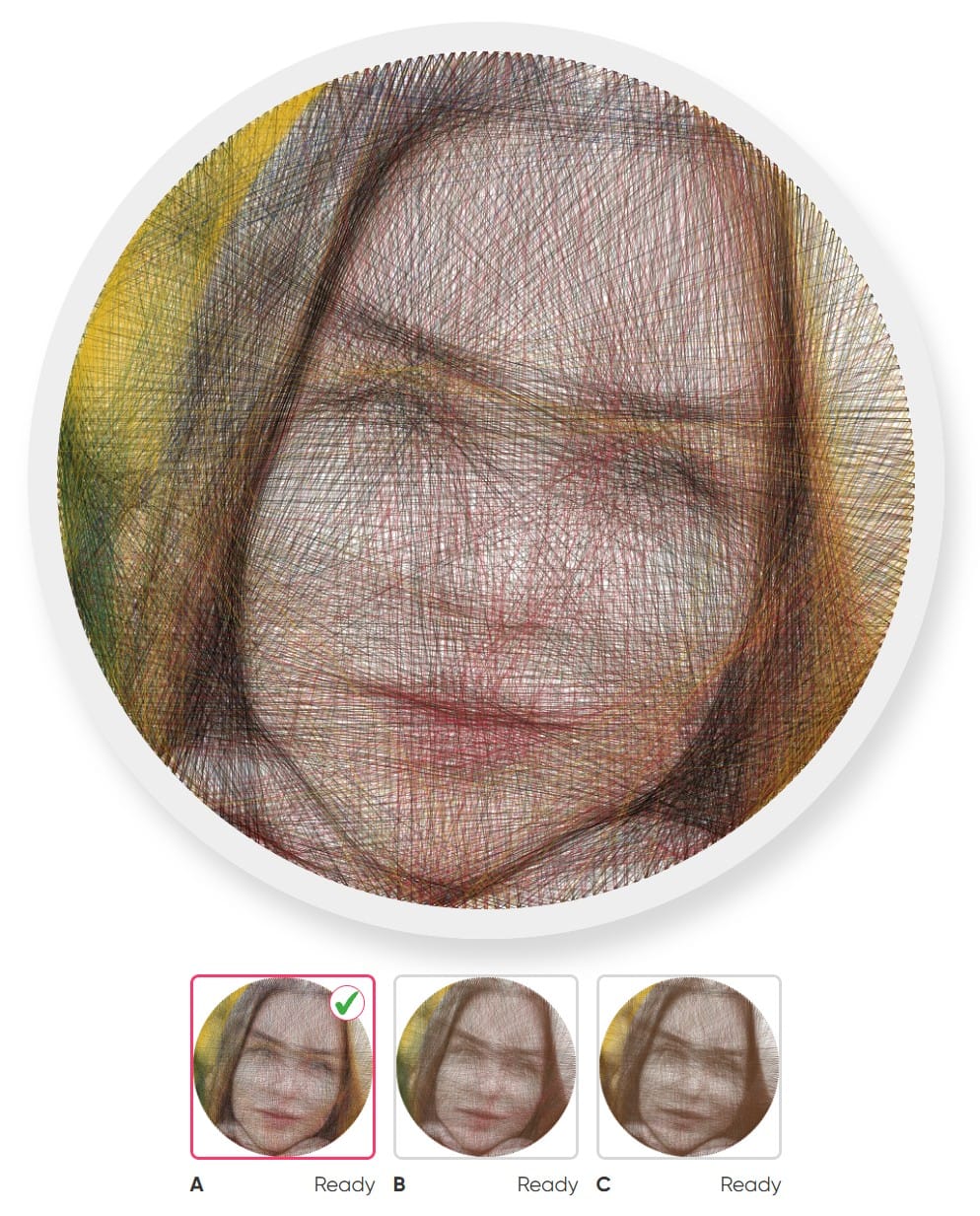
Our new Color String Art technology uses six different thread colors to create a multicolor interpretation of a photograph. The physical DIY kits are still being tested and are not yet available for purchase, but you do not have to wait to see what the technology can do.
You can already upload your own photo and try the Color String Art preview. It gives you the opportunity to experiment with different images and see how they could look when transformed into multicolor thread art.
SPATAR is currently aiming to complete development and make the first physical Color String Art kits available by the end of 2026, provided that the remaining testing and development stages are successfully completed.
What Is Color String Art?
At first glance, a finished piece of String Art can look surprisingly complex. The principle behind it, however, is quite simple.
Nails are positioned around a wooden base or frame. Thread is then stretched from one nail to another in a carefully calculated sequence.
Each individual connection is just a straight line.
One line does not create much of an image. But when hundreds of thread segments begin to cross and overlap, something very different happens. Shapes appear. Shadows become visible. Highlights emerge. Facial features become recognizable.
Color String Art uses the same basic idea, but instead of working with only one thread color, several colors contribute to the finished design.
It is important to remember that the result is not a printed photograph made to look like thread. It is an artistic interpretation created from actual thread lines.
The pattern and winding sequence are generated digitally, while the physical artwork itself is created by hand.
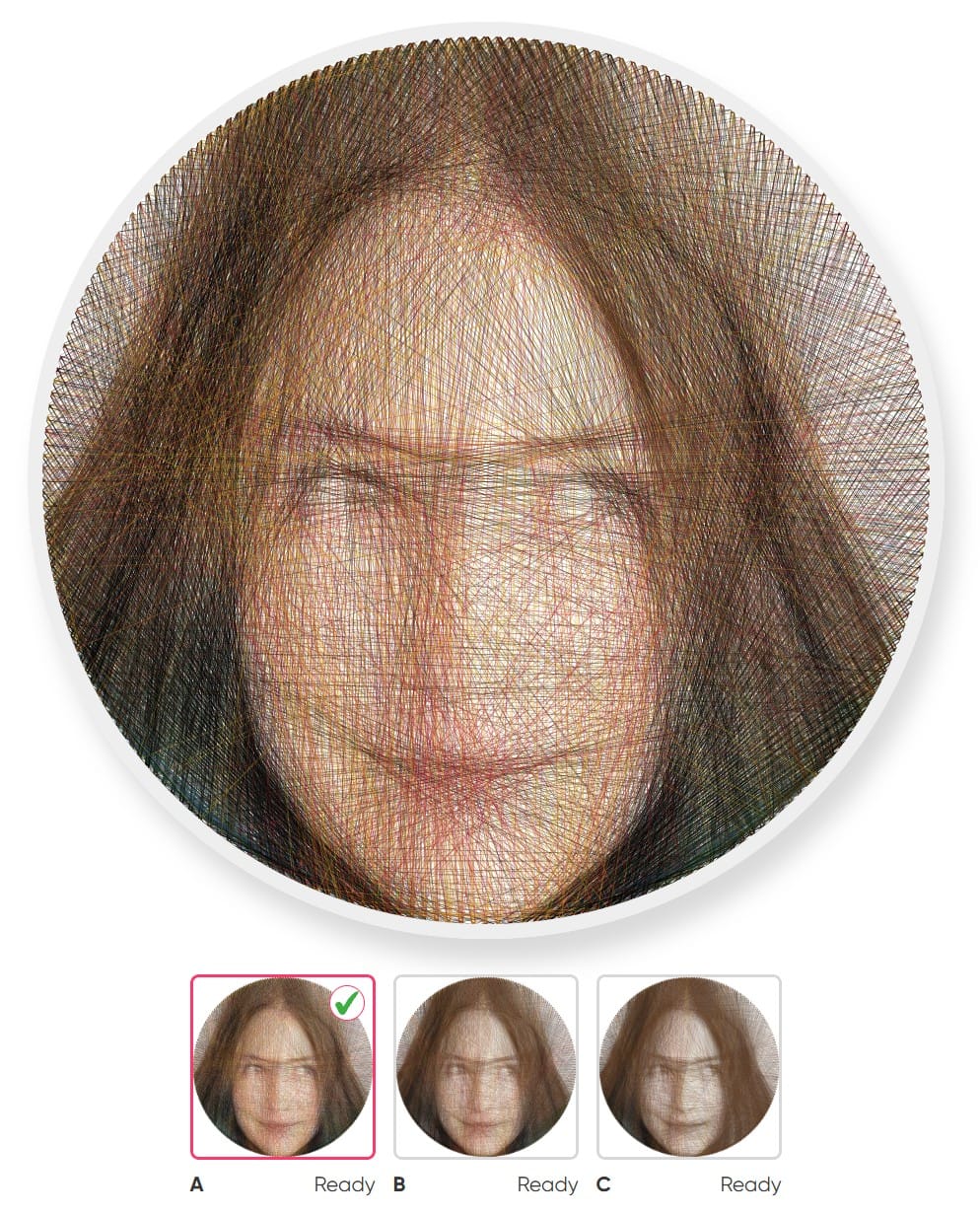
From Black Thread to Six Colors
Monochrome String Art depends heavily on contrast and thread density.
Imagine a portrait made with black thread on a light wooden background. A dark area of the photograph might contain many overlapping lines, while a brighter part of the face might contain relatively few.
Adding color introduces another variable.
SPATAR is currently working with six thread colors:
- black
- blue
- yellow
- red
- green
- brown
Different colors can contribute to different areas and tonal characteristics of the image.
Rather than trying to reproduce every original color exactly, the system uses the available threads to create a recognizable multicolor String Art interpretation of the photograph.
The effect can be quite different from traditional black-thread artwork. A face, pet, landscape or object is no longer defined only by light and darkness. Color becomes part of the structure of the image as well.
And because every visible area is still constructed from straight thread segments, the finished result retains the distinctive geometric character of String Art.
Try Your Own Photo with the Color String Art Preview
One of the most useful parts of developing Color String Art is that you can already experiment with it digitally.
You do not need a physical Color String Art kit to see whether a photograph might work well.
With the SPATAR String Art generator, you can upload your own image and create a Color String Art preview.
That means you can try a portrait, then upload another one. You can compare a close-up with a full-body photograph. You can test your dog, a family picture, a couple's photo or an image from a holiday.
The preview makes experimentation easy before any physical thread is involved.
Photo selection can make a noticeable difference. Images with a clear main subject, visible facial features, reasonable contrast and a relatively uncomplicated background may often translate more clearly into String Art than photographs containing many small objects or very similar tones.
That is not a strict rule, though.
Sometimes an image you would not expect to work produces an interesting result. The easiest way to find out is simply to test it.
The Color String Art preview is already available to try. The physical Color Circle M and Color Ring M DIY kits are still in testing and are not yet available for purchase.
Curious how your own photo could look as Color String Art? Upload it to the SPATAR String Art generator and create your own preview.
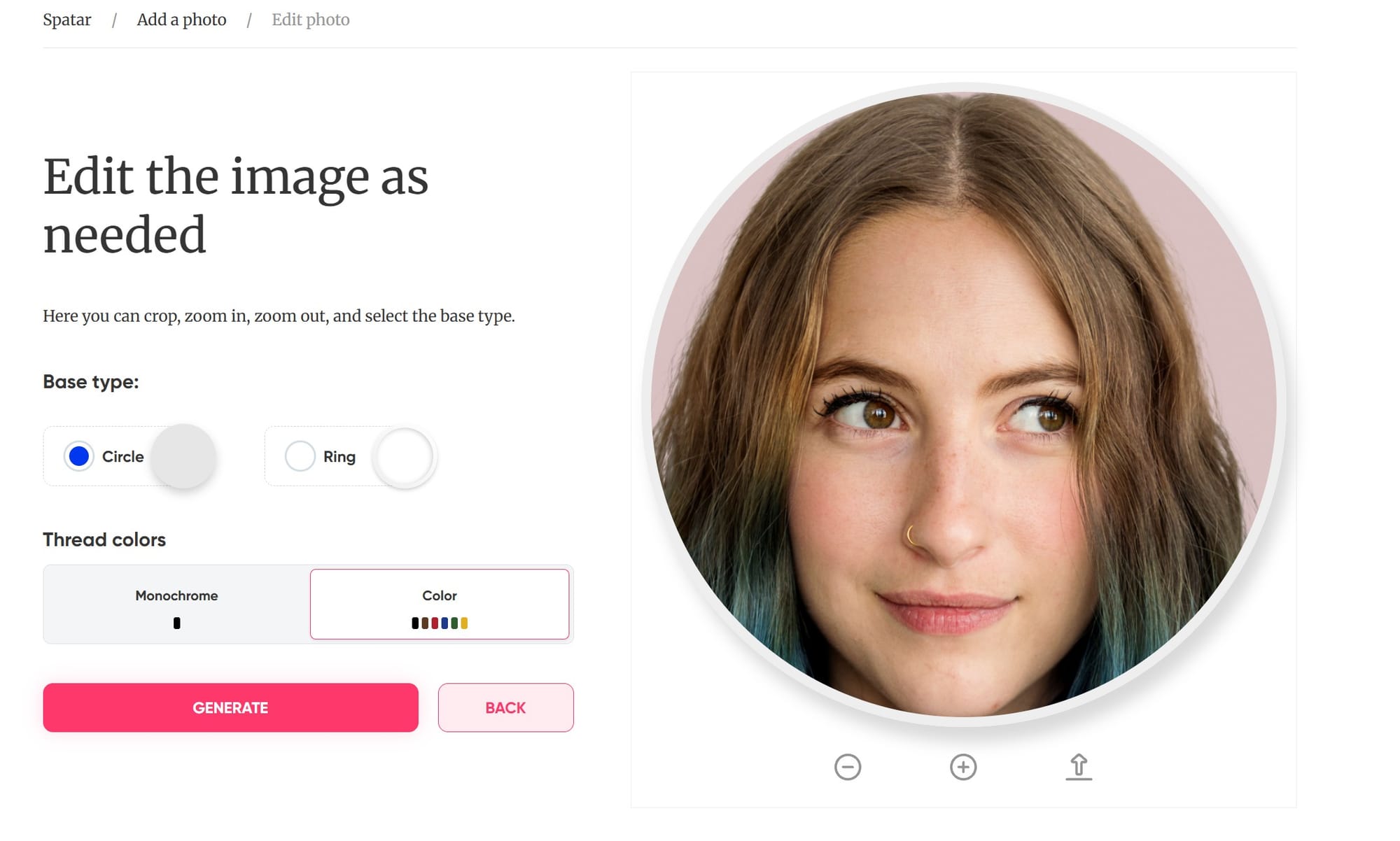
Which Photos Work Well for Color String Art?
There is no single type of photograph that has to be used for String Art.
However, because String Art recreates an image using lines rather than pixels, some photographs naturally translate more clearly than others.
It can be useful to experiment with:
- close-up portraits
- couples
- family photos
- pets
- silhouettes
- faces with clearly visible features
- photographs with a clear main subject
- travel photos with strong shapes or contrast
A photo with a complicated background may still create an interesting design, while another image with very simple composition might produce a particularly clear result.
That is one advantage of having a digital String Art preview available before making the physical artwork.
You can simply try several photographs.
A portrait that seems perfect at first may not be your favorite once you see the generated design. A different crop or another photo from the same series might work much better.
Experimentation is part of the process.
How the Color String Art Generator Works
Behind every photo-based String Art design is a digital calculation.
Conceptually, the process looks like this:
Photo upload → image analysis → color calculations → thread-path generation → winding sequence → Color String Art preview → physical creation by hand
After you upload a photograph, the software analyzes the image and calculates thread paths that can contribute to its visual structure.
Those paths connect different nails around the frame.
For Color String Art, the system also has to work with multiple thread colors rather than just one.
Each photograph therefore produces its own combination of colors, nail-to-nail connections and winding sequences.
The underlying calculations are complex, but using the generator does not require any technical knowledge.
From the user's perspective, the interesting part is simply seeing how a familiar photograph changes when it is reconstructed using thread.
Why Every Photo Produces a Different Result
There is no universal String Art pattern that works for every photograph.
A close-up portrait might depend heavily on facial shadows and the outline of the eyes, nose and mouth. A photograph of a dog may rely more on the shape of the head, ears and differences in the fur.
A couple's photograph introduces two faces and more interaction between light and background areas.
Every image contains its own mixture of:
- light and shadow
- colors
- contrast
- faces and objects
- outlines
- background details
That is why generating several previews is useful.
You might discover that a tightly cropped portrait works better than the original photograph. Or that a simple silhouette creates a more dramatic String Art design than a detailed travel picture.
The preview generator is also a way to explore what kinds of photographs naturally suit this unusual medium.
Testing Color Circle M and Color Ring M
SPATAR is currently testing two physical formats for Color String Art.
Color Circle M
The Color Circle M development version uses:
- a 45 cm circular wooden base
- 224 nails
- an 18 mm thick wooden base
Color Ring M
The Color Ring M development version uses:
- a 53 cm ring-shaped wooden frame
- 246 nails
- an 18 mm thick wooden frame
These are development versions of the physical Color String Art system and are not currently available for purchase.
Why test more than one format?
The geometry of the frame influences the possible thread connections. Diameter, nail count, image area and the number of available intersections can all influence the visual character of the finished artwork.
A larger frame does not automatically mean that one design is better than another. Different geometries can produce different visual characteristics, which is exactly why both formats are being evaluated.
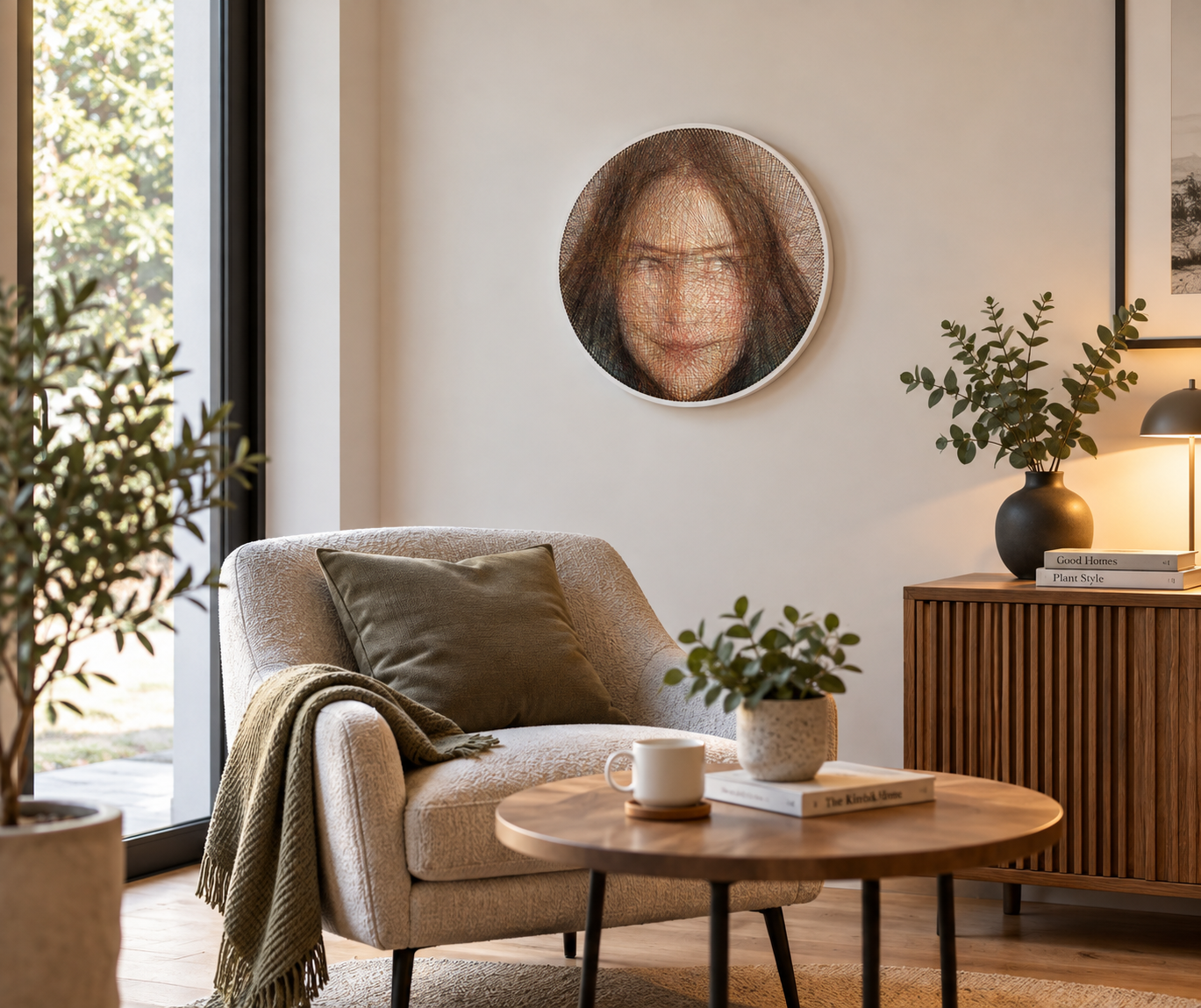
Why Color String Art Is More Complex Than Monochrome String Art
Creating a convincing image with one thread color is already a balancing act.
Adding multiple colors makes the challenge considerably more interesting.
The system must determine not only where a thread line can improve the image, but also which color should contribute to that area.
Too much of one color can dominate the artwork. Too many competing lines can create visual noise. Faces must remain recognizable, contrast must be preserved, and transitions need to work despite the fact that every individual piece of thread remains a straight line.
There is also a practical side.
A design may look good on a computer but still needs to be realistic for someone creating the artwork by hand.
Winding sequences have to remain understandable and manageable.
This is one of the main reasons the physical Color String Art kits are still undergoing testing.
The goal is not only to generate an attractive preview. The complete process needs to work from the uploaded photograph all the way to a physical thread artwork that someone can actually create.
Digital Technology Meets Handmade Art
Photo-based String Art sits somewhere between digital design and traditional craft.
The computer handles the calculations. The photograph provides the starting point. Algorithms help determine the design and the order of the thread connections.
But the final object is still physical.
There is a wooden frame. There are nails. There are spools of thread. And someone has to take that thread and wind it from one nail to the next.
That combination is part of what makes String Art interesting.
Digital image processing, photography and algorithmic design can determine the structure of an artwork, while the actual object still depends on manual work, patience and attention.
The software creates the plan.
The person creates the artwork.
A Slow and Meditative Creative Process
There is also a large difference between generating the digital design and actually making it.
A preview can appear relatively quickly on a screen. Physical String Art grows gradually.
One connection is added, then another, then another.
For a while, the result may look like a collection of seemingly unrelated lines. As more thread is added, the image becomes easier to recognize.
That gradual development is an important part of the DIY String Art experience.
The winding process is repetitive and structured, which many people enjoy as a creative activity in its own right.
You follow the sequence, work through the design step by step and watch the photograph slowly emerge from the accumulating threads.
The finished picture matters, but so does the process of making it.
What SPATAR Is Testing Now
Color String Art is still a developing system.
Current testing is not limited to whether a generated picture looks good on a screen. We are evaluating the complete experience, including areas such as:
- image quality
- color balance
- thread combinations
- compatibility with different photographs
- generator results
- winding order
- clarity of the instructions
- creation time
- consistency between different image types
- physical kit construction
- overall user experience
Some photographs create very different challenges from others, especially when faces, backgrounds, similar colors and fine details are involved.
Testing a wide range of images helps us understand where the technology works well and where it can still be improved.
SPATAR's current development goal is to complete this testing and prepare the physical Color String Art kits for availability by the end of 2026.
This is a target rather than a fixed release date. Development will continue until the software, physical components and DIY process meet the intended standard.
Color String Art Preview vs. Physical Color String Art Kit
Because the project is currently in development, there is one important distinction to keep in mind.
Color String Art Preview
The digital preview is already available to try.
You can:
- upload your own photograph
- generate a multicolor String Art preview
- experiment with different pictures
- compare several results
- see how a photograph could translate into thread art
It is a digital tool for exploring your images and the possibilities of Color String Art.
Physical Color String Art Kit
The physical kits are different.
SPATAR is currently testing the Color Circle M and Color Ring M formats with the aim of allowing users to physically create the generated design using colored thread and a wooden base or frame.
These physical kits are still in development and are not yet available for purchase.
SPATAR is targeting availability by the end of 2026, subject to successful completion of the current testing and development work.
The digital preview therefore gives you an early opportunity to experiment with Color String Art before the physical kits become available.
When Will the Physical Color String Art Kits Be Available?
SPATAR is currently targeting the end of 2026 for the first physical Color String Art kits.
That remains a development target rather than a guaranteed release date.
Before the physical kits become publicly available, we are continuing to work on the image-generation process, color results, winding sequences, instructions, physical components and overall DIY experience.
That testing matters because a Color String Art kit has to do more than generate an interesting picture.
It has to translate that picture into a physical project that someone can realistically create by hand.
In the meantime, there is already something you can try.
Upload your own photo and see how it could look as multicolor String Art with the SPATAR Color String Art preview.

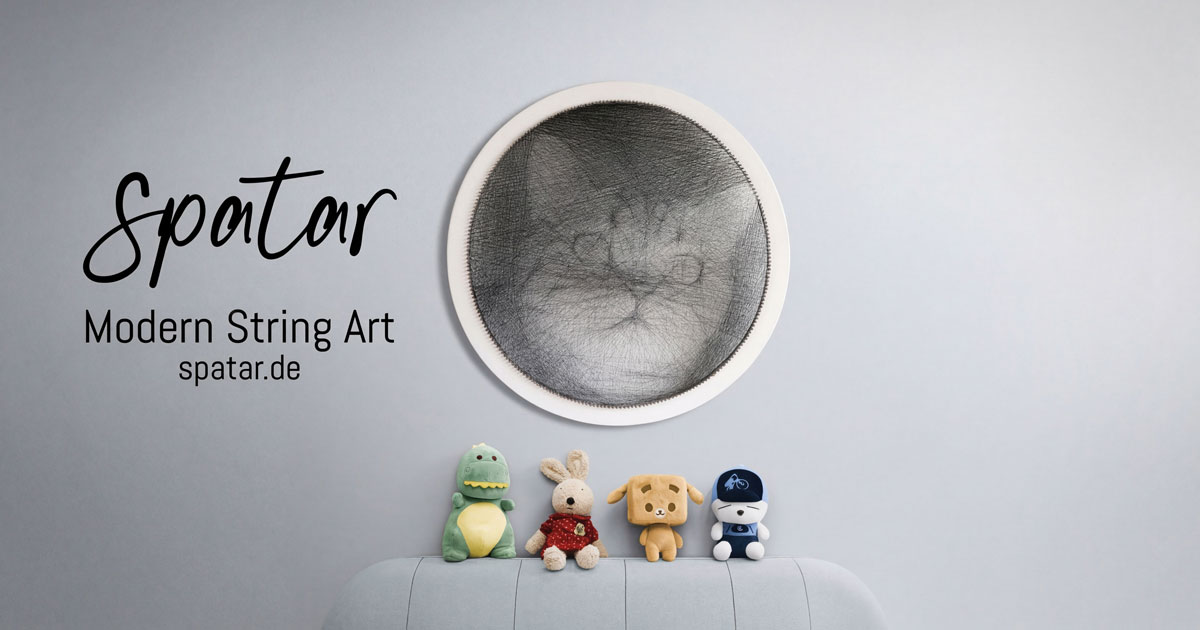
You can test several photographs, compare the generated designs and discover which image you would most like to turn into physical thread art.
Further development and availability updates for Color Circle M and Color Ring M will be published on spatar.de.
From a Photograph to Hundreds of Colored Lines
Color String Art brings together things that normally belong to very different worlds: photography, algorithms, colored thread, woodworking and handmade craft.
A photograph begins as pixels on a screen.
The String Art generator interprets that photograph as a network of possible thread connections.
Those connections can eventually become a physical artwork made from hundreds of straight lines.
Adding multiple colors gives us a new way to explore that transformation.
The physical Color String Art kits are still evolving, with SPATAR currently aiming for availability by the end of 2026. But you can already experiment with the most personal part of the process: your own photograph.
Try a portrait.
Try your pet.
Try a couple picture.
Try several versions of the same image.
Upload your photo to the Color String Art preview and see how it could look as multicolor thread art.
As testing of the physical Color Circle M and Color Ring M kits continues, SPATAR will share further updates on spatar.de.