

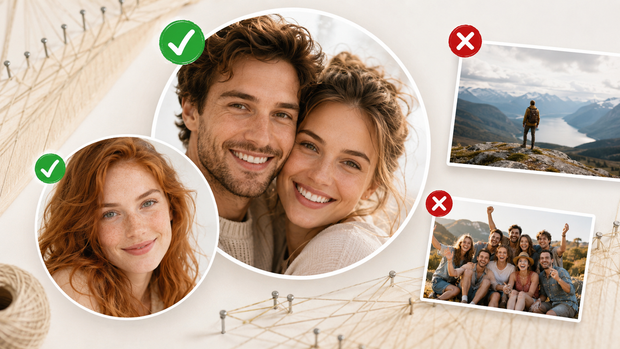
When choosing a photo for a personalized string art portrait, the number of people matters. Although it may be tempting to use a large family or group photograph, the clearest and most recognizable results usually come from images containing one or two faces.
String art creates an image using intersecting thread lines rather than printed pixels. For this reason, simple compositions, large faces, strong contrast, and clearly visible facial features produce better results than photographs containing many people or small details.
One or Two Faces Produce the Best Results
For a personalized string art portrait, we recommend choosing a photograph with:
- one face in a close-up portrait; or
- two faces positioned close together.
When only one or two people appear in the image, their faces can occupy a large part of the available design area. This makes it easier for the thread pattern to reproduce the most important features, including:
- the shape of the face;
- the eyes and eyebrows;
- the nose and mouth;
- the hairstyle;
- the contrast between light and shadow.
The larger and clearer the faces are in the original photograph, the more recognizable they are likely to be in the finished artwork.
Why One Face Is Often the Strongest Choice
A close-up photograph of one person is generally the best option when facial detail is the priority.
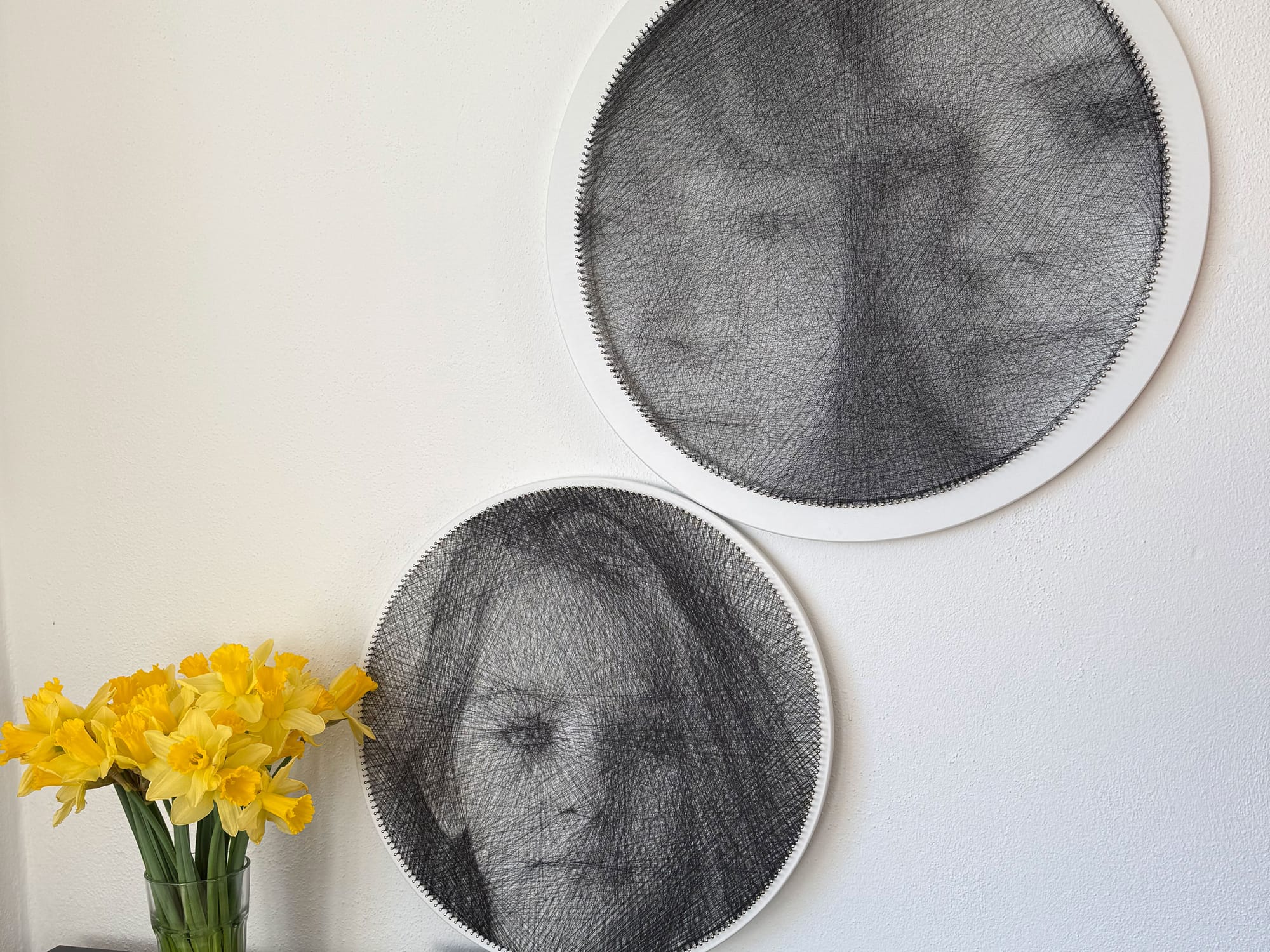
Because the face occupies most of the picture, the string art design can focus on the person rather than dividing the available space between several subjects. The facial outline, hair, eyes, lips, and shadows have more room to become visible through the thread lines.
The best individual portraits usually have:
- the face looking toward the camera;
- clearly visible eyes and facial features;
- good lighting;
- a white or light background;
- strong contrast between the person and the background;
- minimal unnecessary details.
A simple portrait is normally more suitable than a photograph showing the person from head to toe or standing far away.
Can Two People Be Included?
Yes. Two people can work very well when they are photographed closely together.
Suitable examples include:
- a couple;
- a parent and child;
- two siblings;
- close friends;
- a wedding or engagement portrait.
For the best result, both faces should be large, clear, and positioned at approximately the same distance from the camera.
A close-up photo of two people with their heads next to each other is usually much more suitable than a full-body photograph in which the faces appear small.
The image should also avoid large gaps between the people. A compact composition allows both faces to remain prominent within the portrait.
Why Group Photographs Are Usually Not Suitable
Photographs with many people are generally not recommended for a string art portrait.
As more people are added, each face becomes smaller. Small faces provide less visible information for the thread pattern, so important features may become difficult to distinguish.
A group photograph may contain:
- several small faces;
- overlapping people;
- different distances from the camera;
- complicated clothing patterns;
- hands, glasses, hats, or other accessories;
- a busy background;
- many areas of light and shadow.
All these elements compete for space within the design. Instead of producing several clearly recognizable portraits, the finished result may show only the general shapes and contrast of the group.
For this reason, a photograph with five or six people taken from a distance is much less suitable than a close-up portrait of one or two people.
Why Face Size Is More Important Than Photo Resolution
A high-resolution photograph is helpful, but resolution alone does not make an image suitable.
For example, a professionally taken group photo may be extremely sharp. However, if eight people appear in the photograph, each individual face may still occupy only a small part of the image.
A close-up smartphone photo of one person may produce a stronger string art portrait because the face is much larger in the frame.
When evaluating a photo, check how large the faces appear—not only how many pixels the file contains.
Close-Up Portraits Are Better Than Full-Body Photos
Full-body photographs are not recommended because the face usually occupies only a small area.
The design must then include the person’s body, clothing, surroundings, and background. This leaves less visual space for facial features.
For a stronger result, choose:
- a head-and-shoulders portrait;
- a close-up of the face;
- an upper-body photo in which the face remains large;
- a tightly composed photo of two people.
Avoid photographs in which the subjects are standing far from the camera, even when the entire body is clearly visible.
The goal is not to include as much of the scene as possible. The goal is to make the most important faces large and recognizable.
Choose a Simple, Light Background
The background also affects how clearly the people can be represented.
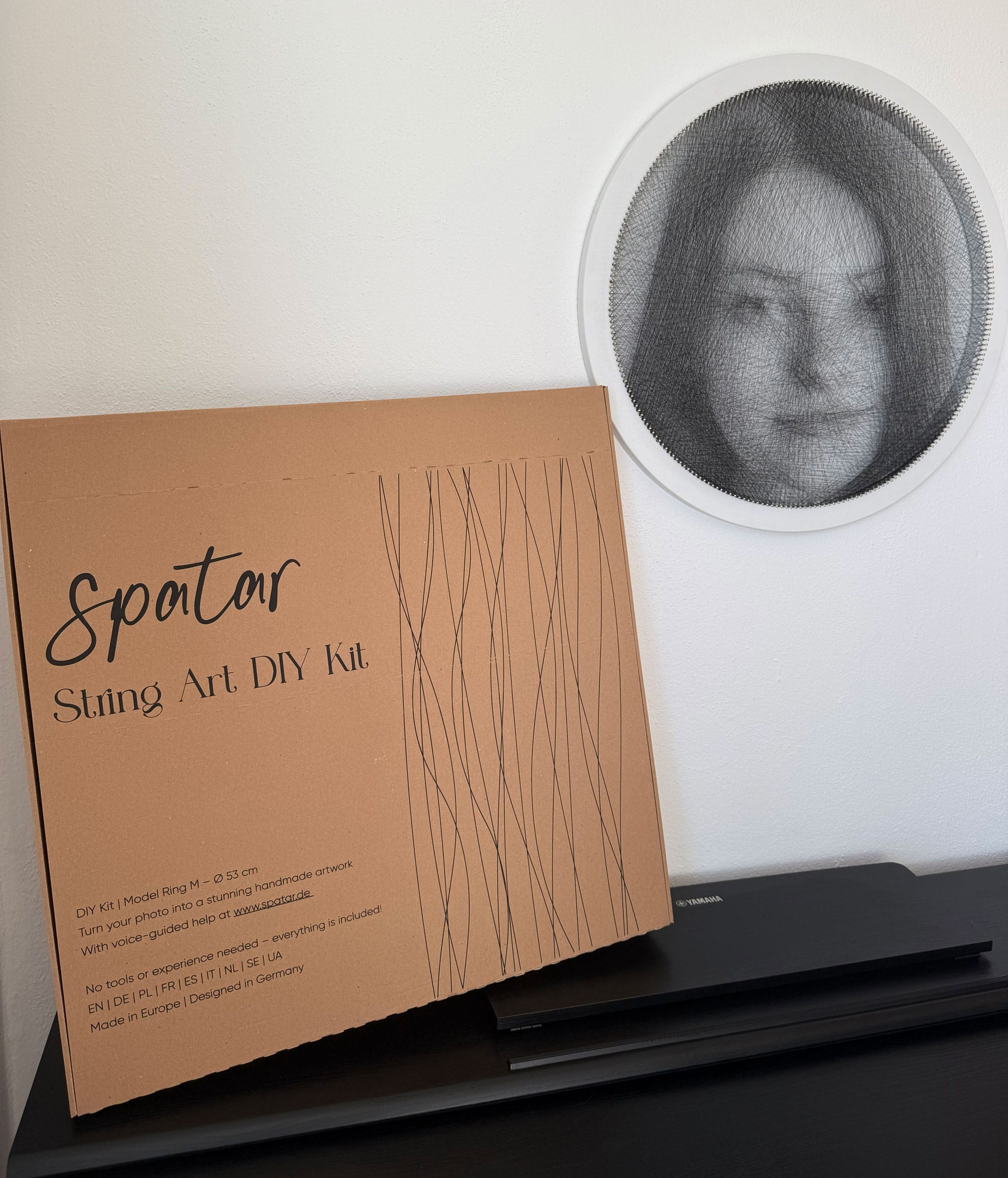
High-contrast photos on a white or light background are best suited for string art. A simple background helps separate the face, hair, and shoulders from the surrounding space.
A busy background may contain furniture, trees, other people, patterns, decorations, or strong shadows. These details can interfere with the main subject and make the composition unnecessarily complex.
When possible, choose a photograph with:
- a white or light-colored background;
- few distracting objects;
- a clear outline around the head and hair;
- noticeable contrast between the subject and the background.
The simpler the image, the easier it is for the portrait to emphasize the person.
Facial Features Must Be Clearly Visible
The selected photo should clearly show the most important facial features.
Avoid images in which:
- the face is too dark;
- the eyes are hidden in shadow;
- hair covers much of the face;
- one person is hidden behind another;
- the image is blurry;
- the person is looking completely away from the camera;
- the face is partly cropped out.
A photograph does not need to look like an official passport photo. Natural expressions and slightly angled faces can work. However, the person must remain clearly visible and recognizable.
Blurry or Dark Photos Should Be Avoided
Blur and poor lighting remove important visual information.
When facial contours are unclear in the original photo, the string art design cannot reliably reproduce them. Increasing brightness or sharpness may help slightly, but it cannot fully restore details that were not captured.
Before selecting a photo, zoom in and examine the faces. Check whether you can clearly see:
- the eyes;
- the nose;
- the mouth;
- the edge of the face;
- the hairstyle.
When these features are difficult to see on a screen, they are unlikely to become clearer in the finished string art portrait.
Can a Group Photo Be Cropped?
Sometimes a group photograph can still be used if it is cropped to include only one or two people.
For example, you may have a family photo containing six people, but want the portrait to feature a parent and child. Cropping the image around those two faces may create a much more suitable composition.
The crop should:
- make the selected faces larger;
- remove unnecessary people and background details;
- keep the full heads visible;
- leave a small amount of space around the faces;
- preserve good image quality.
However, cropping cannot solve every problem. When the original people are far from the camera, their faces may remain blurry or too small even after cropping.
Examples of Suitable Photos
One close-up face
A sharply focused face against a light background is the most suitable option. The facial features are large and there are few distracting details.
Two people close together
A couple photographed with their heads next to each other can produce a strong result. Both faces should be clearly lit and similar in size.
Parent and child portrait
A close-up photograph of a parent and child can work well when neither face is hidden and both subjects occupy most of the frame.
Examples of Unsuitable Photos
A full-body portrait
Even when the person is clearly visible, the face may be too small compared with the rest of the image.
A photograph taken from a distance
The person may occupy only a small section of the composition, leaving insufficient detail for the face.
A large group photograph
Multiple people, small faces, overlapping subjects, and background details make the image too complex.
A blurry or dark photograph
Facial features cannot be represented clearly when they are already difficult to see in the source image.
How to Choose Between Several Photos
When comparing different photographs, ask these questions:
- Does the photo contain only one or two main faces?
- Are the faces large within the frame?
- Are the facial features clearly visible?
- Is the image sharp and well lit?
- Is the background white, light, or simple?
- Are the people positioned close together?
- Is the photo free from unnecessary details?
Choose the image with the simplest and clearest composition, even when another photograph has greater emotional significance.
A technically suitable photo will usually produce a more recognizable string art portrait.
Frequently Asked Questions
What is the ideal number of people?
One or two people are ideal. This gives each face enough space to remain clear and recognizable.
Can three people be included?
A photo of three people may sometimes be processed, but the result will usually contain less facial detail than a portrait of one or two people. For the best result, select no more than two close-up faces.
Can I use a family group photo?
Large family group photos are generally not suitable. Consider cropping the image to include only one or two family members.
Can I use a full-body photo?
A close-up portrait is preferable. In a full-body photograph, the face is normally too small compared with the complete image.
Does the background matter?
Yes. White or light backgrounds with strong contrast are best. Busy or dark backgrounds can reduce clarity.
Can a blurry photo be improved?
Minor adjustments may help, but a significantly blurry photograph cannot provide the missing facial details. Choosing a different photo is usually the better option.
Choose One or Two Clear Faces
The recommended number of people for a string art portrait is one or two.
A single close-up face usually provides the strongest detail. Two faces can also work very well when the people are close together, clearly visible, and photographed against a simple background.
Avoid full-body photographs, distant subjects, large groups, blurry images, and dark compositions. Too many people or details reduce the space available for each face and make recognizability more difficult.
For the best result, remember one simple rule:
The simpler and clearer the image, the better the string art portrait.