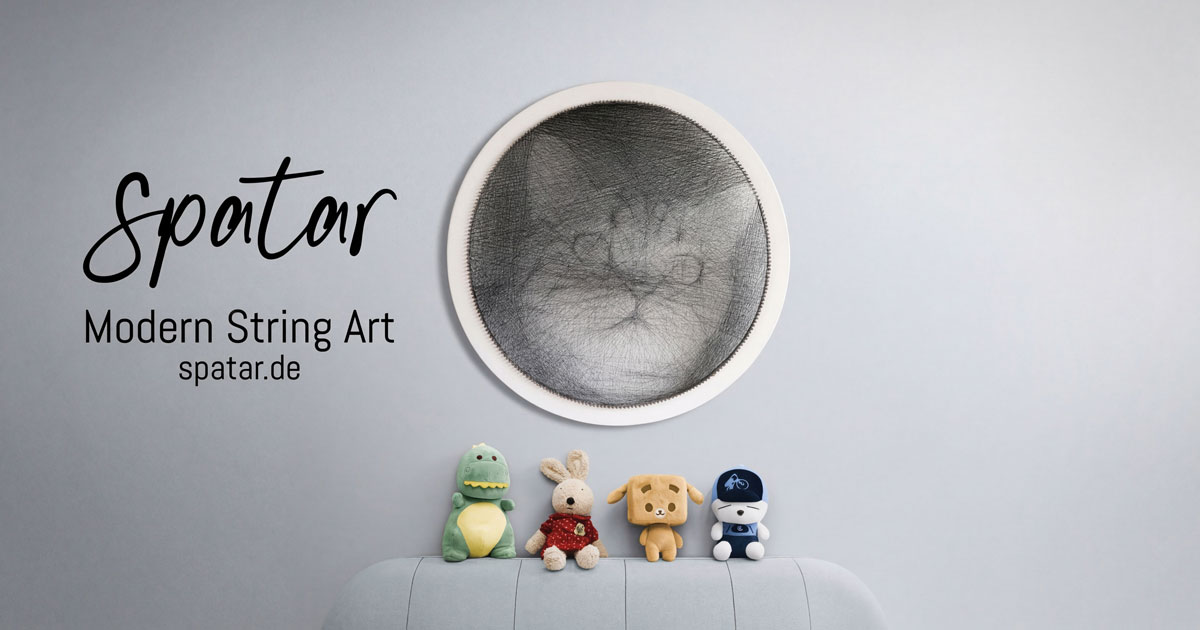


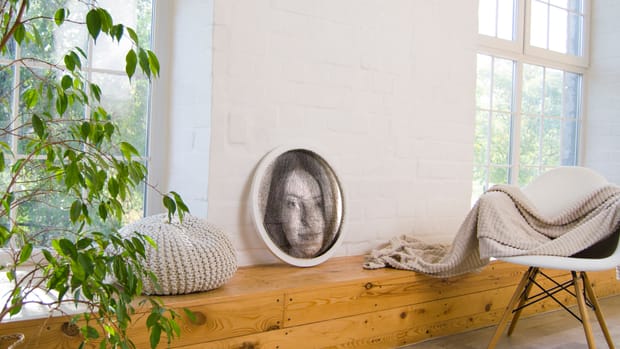
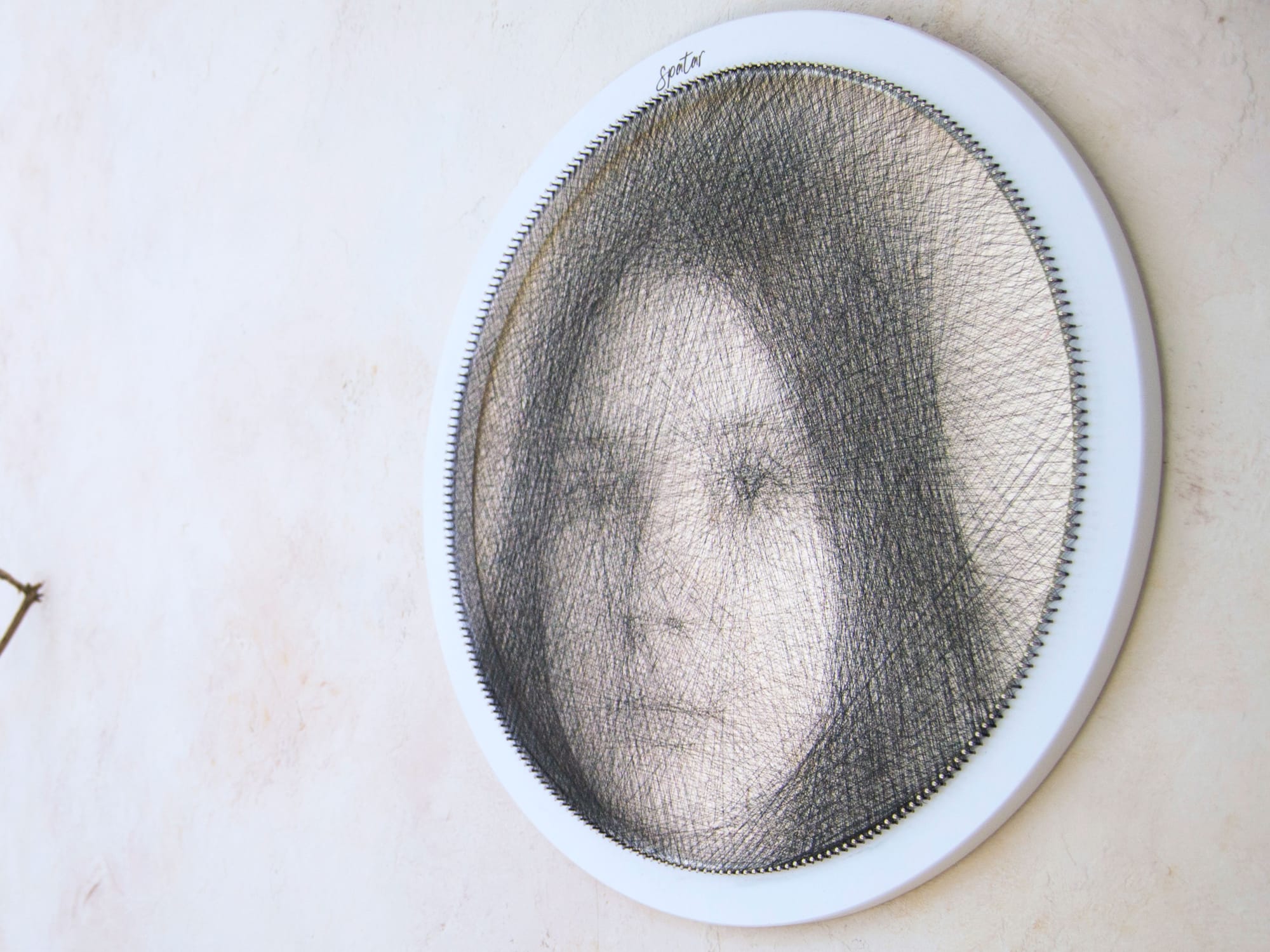
A string art ring is a circular form of string art in which thread is stretched between nails arranged around a round frame. By connecting those nails in a carefully calculated order, hundreds or thousands of individual lines gradually form a recognizable image.
At first glance, the idea seems almost impossible. How can one black thread create eyes, a face, hair, shadows or even a pet portrait?
The answer is in the density and direction of the lines.
Some areas receive many overlapping thread paths and become darker. Other parts remain almost untouched and appear lighter. Viewed from a distance, all of those individual lines blend together into a portrait.
This combination of geometry, photography and handcraft is what makes a circular string art portrait so distinctive.
What Is a String Art Ring?
A string art ring is a round frame with nails positioned around its edge. Thread is guided from one nail to another according to a predefined sequence.
Unlike traditional decorative string art, which often uses simple shapes such as hearts, stars or letters, a modern string art ring can reproduce much more complex images.
A portrait is a good example.
Instead of drawing the face directly, the artwork is built indirectly. The thread crosses the center of the ring repeatedly from different angles. Each line contributes only a tiny part of the image, but together the lines create light, shadow and recognizable features.
That means the portrait is not printed onto the frame.
The thread itself creates the image.
How Does a Circular String Art Portrait Work?
The basic principle is surprisingly simple.
Imagine a circle with many nails placed evenly around its edge.
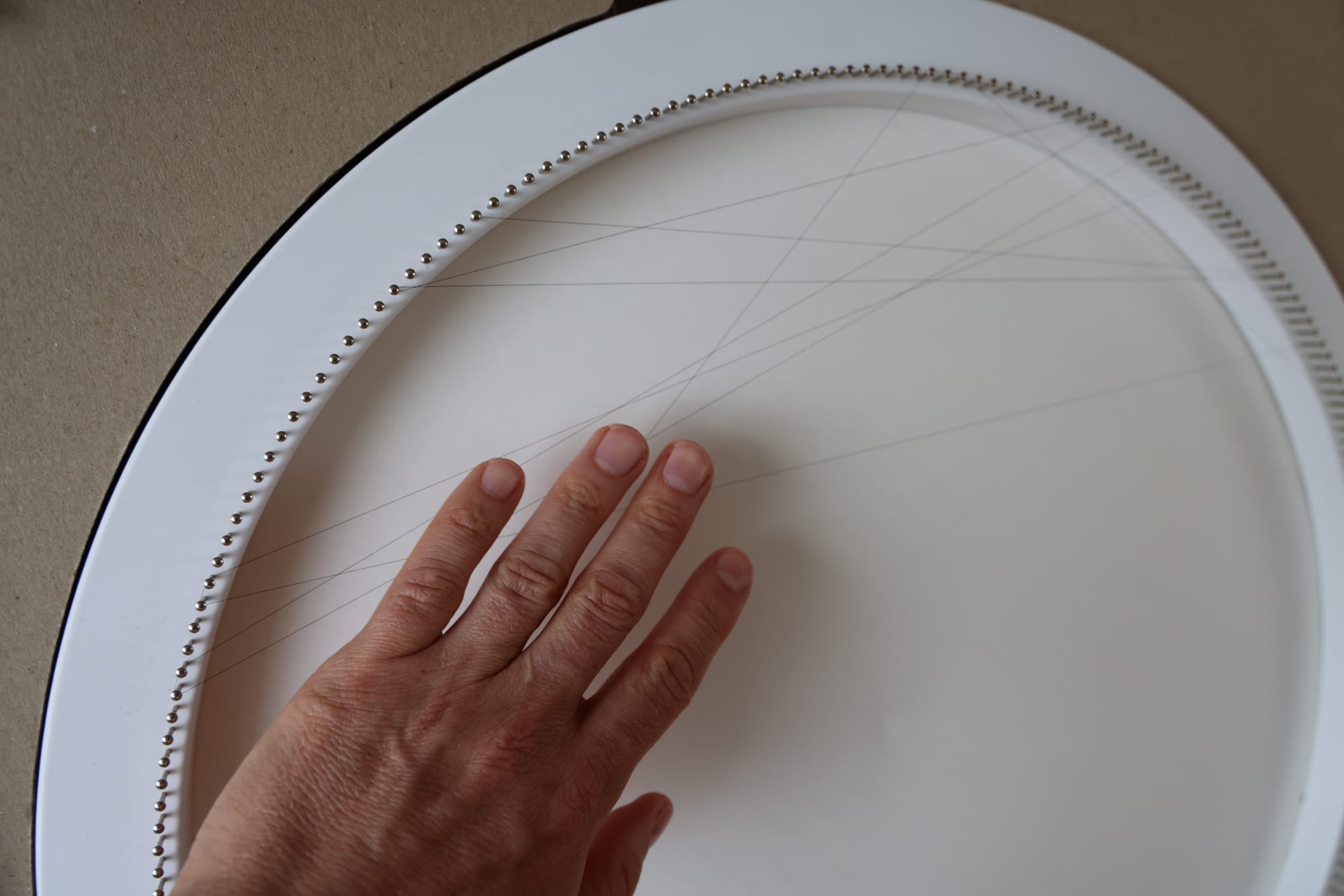
A thread starts at one nail, crosses the circle and wraps around another nail. It then moves to another point, crosses the circle again, and continues.
After a few connections, the result looks random.
After dozens of connections, darker areas begin to appear.
After hundreds of lines, the image starts becoming recognizable.
The final portrait is essentially built from different concentrations of thread.
Where more lines overlap, the image becomes darker.
Where fewer lines pass, it remains lighter.
This is why a single black thread can create something that looks much more detailed than you might expect.
Why Are the Nails Arranged in a Circle?
The circular arrangement is especially useful for portraits because every nail can connect to many other points around the ring.
That creates a huge number of possible line directions.
A line can pass diagonally across a face.
Another can create shadow beneath the eyes.
Hundreds of additional lines can gradually build the shape of the nose, mouth, hair and background.
The circle acts almost like a coordinate system for the thread.
Instead of placing thread only horizontally or vertically, the circular layout allows lines to approach the image from many angles.
This makes the format particularly suitable for monochrome portraits.
How Can Black Thread Create a Detailed Portrait?
One of the most interesting things about string art is that the thread does not need different colors to create depth.
The effect comes from line density.
Imagine looking at two areas of the same white background.
In one area, only five black lines cross.
In another, fifty lines overlap.
The second area naturally appears darker.
A string art portrait uses this principle across the entire image.
Dark hair might contain many overlapping thread paths. A bright cheek might contain very few. The outline of an eye may appear because several thread lines happen to reinforce one another in the same area.
From close up, you see individual strands.
From farther away, your eyes combine those strands into a complete image.
That change in appearance depending on viewing distance is one of the most distinctive characteristics of string art.
How Does a Photo Become a String Art Ring?
A personalized string art ring usually begins with an ordinary photo.
The image is analyzed and converted into a pattern that can be recreated using the available nail positions.
The basic process looks like this:
- Choose a suitable photo.
- Upload the image.
- Generate a string art preview.
- Create the personalized weaving sequence.
- Follow the instructions nail by nail.
- Continue until the portrait is complete.
With Spatar, the digital generator handles the difficult planning stage.
You do not need to calculate which nails should be connected manually.
Instead, you follow a personalized weaving diagram while creating the artwork yourself.
Traditional String Art vs a String Art Ring
Traditional string art and portrait string art use the same basic materials, but they often have very different goals.
Classic string art commonly uses nails arranged in a recognizable shape. The thread follows that shape to create geometric patterns, words or decorative objects.
A portrait-based string art ring works differently.
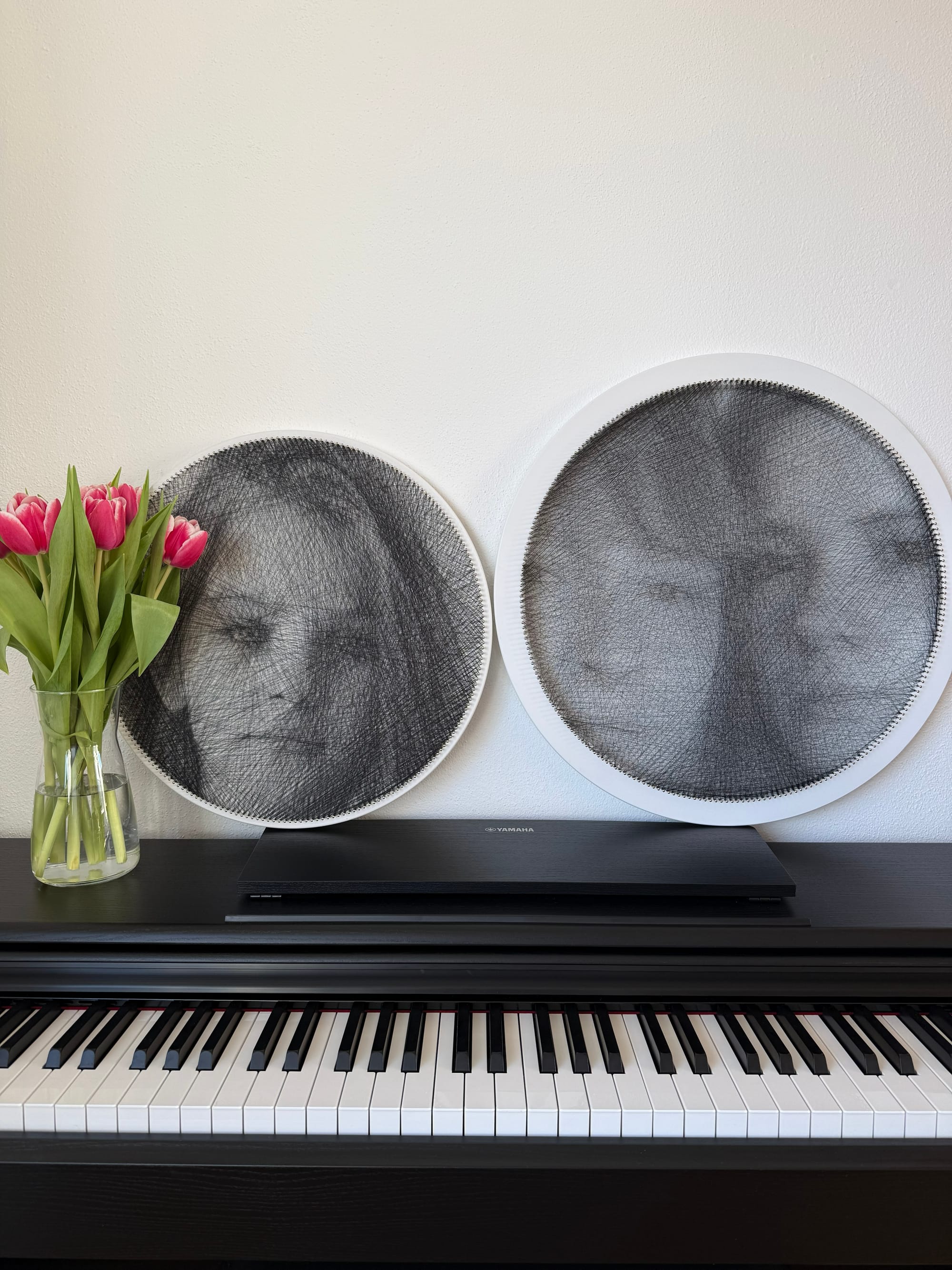
The nails form only the outer circular structure. The picture appears inside that circle because of the paths taken by the thread.
The face is therefore not outlined by nails.
It emerges from the intersections between the lines.
This gives circular portrait string art a very different visual character from traditional nail-and-thread crafts.
What Is Spatar Ring M?
The Spatar Ring M is designed specifically for creating personalized string art portraits.
It uses:
- a 53 cm ring-shaped wooden base
- 246 nails
- premium black string
- a multi-purpose assembly box
- a ready-to-hang design
- digital step-by-step instructions
- a detailed personalized weaving diagram available through the website
The 53 cm format gives the finished artwork enough visual presence to work as a standalone wall piece while still fitting comfortably into many residential interiors.
The 246 nails provide the connection points needed for the personalized weaving pattern.
You create the portrait by following the instructions and guiding the thread from nail to nail.
What Photos Work Best for a String Art Ring?
Not every photo translates equally well into thread art.
Because the final image is monochrome and created from line density, clarity and contrast are particularly important.
Choose a Clear Subject
The main person or subject should be easy to identify.
Close-up portraits often work better than photos where the face occupies only a small part of the image.
Use Good Lighting
Clear differences between light and shadow help create a stronger string art result.
Very flat lighting can reduce facial definition, while extremely dark photos may lose important detail.
Avoid Motion Blur
The original photo should be reasonably sharp.
If facial features are already unclear in the photograph, converting them into string art becomes more difficult.
Keep the Background Simple
A complicated background can compete with the main subject.
For portraits, it is usually better when the person or pet clearly stands out from the surroundings.
Test More Than One Photo
Sometimes the photo you expect to work best is not the strongest option.
Testing several images in the generator can help you compare how different angles, expressions and lighting conditions translate into thread.
Why Does a String Art Ring Look Different Up Close?
String art is unusual because the viewing experience changes with distance.
Stand very close to a finished piece and you mainly see thread.
You notice individual lines, nail positions and overlapping strands.
Move several steps away and the structure begins to disappear.
The portrait becomes more dominant.
This happens because your visual system naturally combines fine details when they become too small to distinguish individually.
The effect is similar to looking at dots in a printed photograph or pixels on a screen.
Close up, you see the components.
From the correct distance, you see the image.
This is one reason a string art portrait can be especially interesting as wall decor. It offers two visual experiences in the same object.
Where Can You Display a String Art Ring?
A circular string art portrait can work in many parts of a home.
Above a Sofa
A larger ring can become a strong focal point above a living room sofa, particularly when there is enough empty wall space around it.
In a Bedroom
A personalized family, couple or pet portrait can create a more intimate decorative element in a bedroom.
In a Hallway
A hallway or entrance area works well when you want the artwork to be visible without competing with many other decorations.
Above a Sideboard or Console
A round portrait creates contrast against the horizontal lines of a cabinet or sideboard.
In a Home Office
A portrait of someone meaningful can add a personal element to an otherwise functional workspace.
The circular form also makes the artwork easy to combine with rectangular furniture, shelves and doors because the contrast in shapes naturally draws attention.
Is a String Art Ring Suitable for Beginners?
A personalized portrait may look technically complicated, but you do not need to design the pattern yourself.
The digital weaving diagram gives you a defined sequence.
Your job is to follow that sequence carefully.
The first part of the project can feel unfamiliar because you are learning how to guide the string, maintain consistent tension and move efficiently between nails.
After some practice, the repeated movements usually become much more natural.
For beginners, the most useful approach is simple:
- work slowly at first,
- follow the sequence carefully,
- keep the thread tension consistent,
- take breaks when needed,
- do not judge the portrait too early.
String art is repetitive by nature, so the process becomes easier once you establish a rhythm.
Why the Portrait Can Look Strange Halfway Through
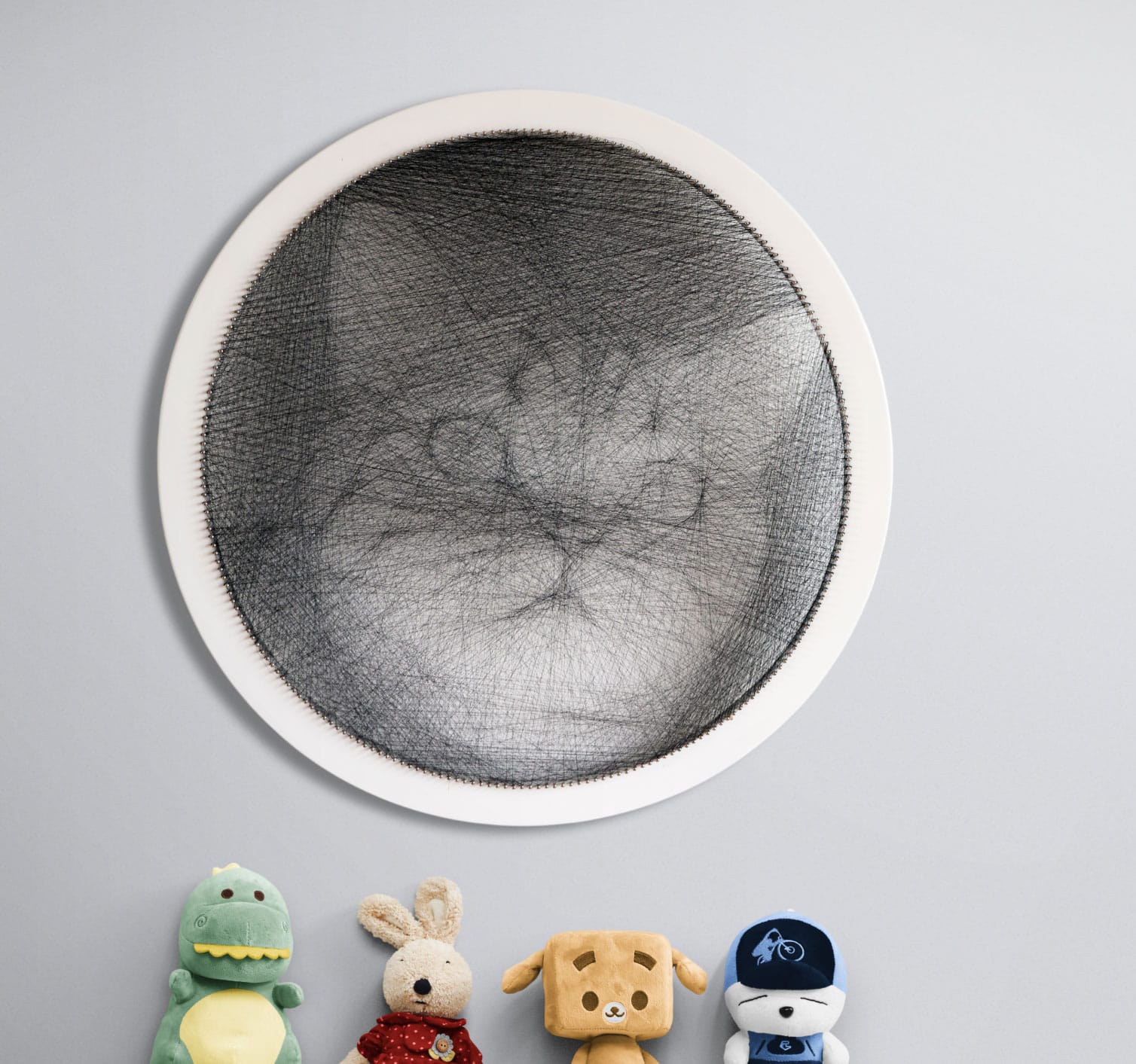
A partially finished string art portrait often looks nothing like the final image.
This surprises many first-time makers.
The reason is that the portrait depends on the combined effect of many layers of thread.
Early in the project, there may not yet be enough line density to create the correct contrast.
A cheek may look empty.
An eye may not yet be visible.
The background might seem darker than expected.
As additional connections are completed, these relationships change.
The image is constantly developing.
So if the portrait looks abstract halfway through, that does not necessarily mean anything has gone wrong.
Is a String Art Ring the Same as a Circle M?
Not exactly.
Spatar offers two circular string art formats, but their physical construction is different.
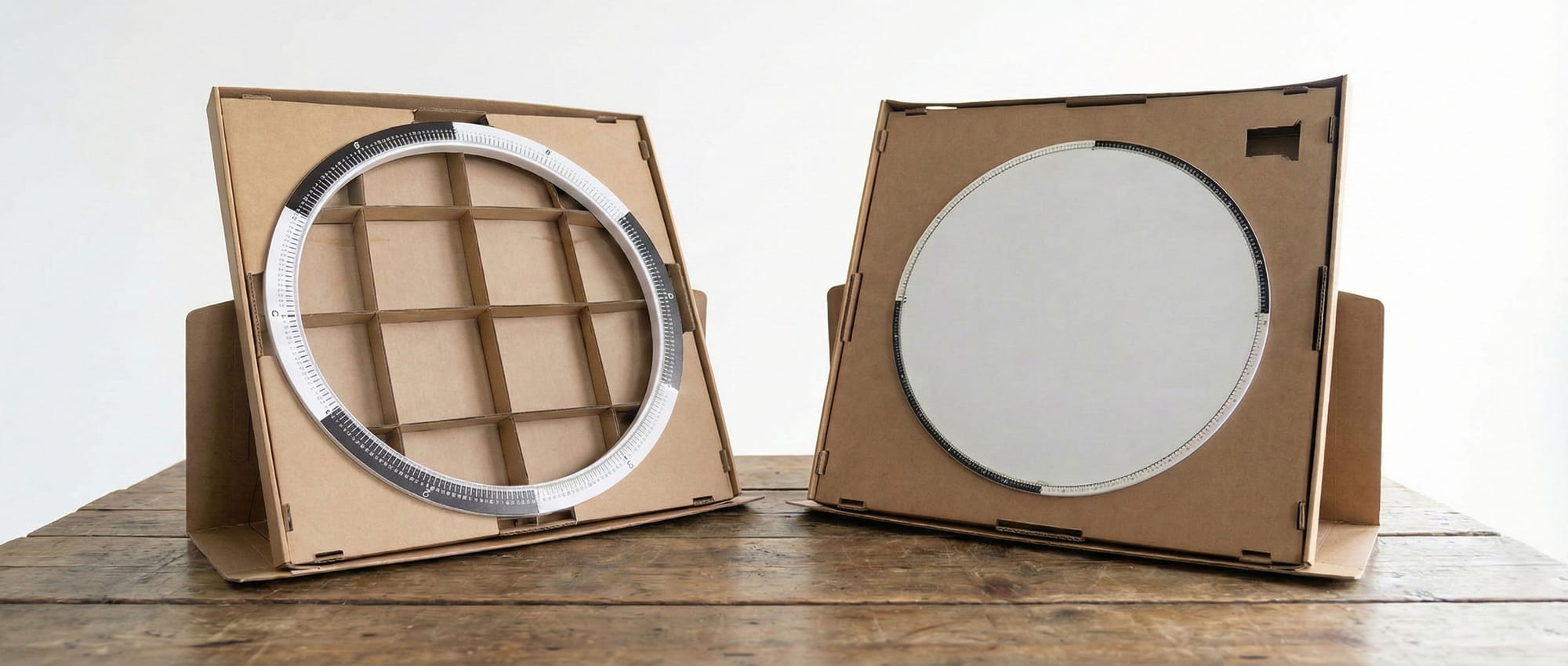
Ring M uses a 53 cm ring-shaped base with 246 nails.
Circle M uses a 45 cm circular wooden base with 224 nails.
Both can be used for personalized string art portraits, but the visual result is different.
Ring M has an open ring structure and a larger diameter, giving it a lighter, more sculptural appearance.
Circle M has a more compact circular base.
If you want to compare the two formats in detail, choose based primarily on the appearance and size you want for your wall.
FAQ About String Art Rings
What is a string art ring?
A string art ring is a circular frame with nails positioned around its edge. Thread is connected between those nails in a specific sequence to create an image or portrait.
Is the portrait printed onto the ring?
No. The visible portrait is created entirely by the black thread and the way the lines overlap.
How many nails does Spatar Ring M have?
Spatar Ring M uses 246 nails arranged around a 53 cm ring-shaped wooden base.
Can I use my own photo?
Yes. A personalized design can be generated from your own photo using the Spatar art generator.
Do I need string art experience?
Previous experience is not required. The project is completed by following the digital step-by-step weaving diagram.
Can a string art ring be hung on the wall?
Yes. The Spatar Ring M is designed as a ready-to-hang piece once the portrait is complete.
What color thread is used?
Spatar portrait kits use premium black string. Different levels of overlapping thread create the light and dark areas of the portrait.
A Portrait Made from Lines
A string art ring takes a familiar idea — a photograph — and recreates it in a completely different way.
There is no ink creating the shadows.
There are no printed facial features.
Instead, a circular arrangement of nails and a single visual language of intersecting black lines gradually reconstruct the image.
Up close, it looks geometric.
From farther away, it becomes a portrait.
That transformation is what makes circular string art so interesting both as a DIY project and as personalized wall art.
With Spatar Ring M, the physical frame, nails and thread provide the structure, while the personalized digital weaving diagram guides the creative process.
You provide the photo.
Then, line by line, you create the portrait yourself.