



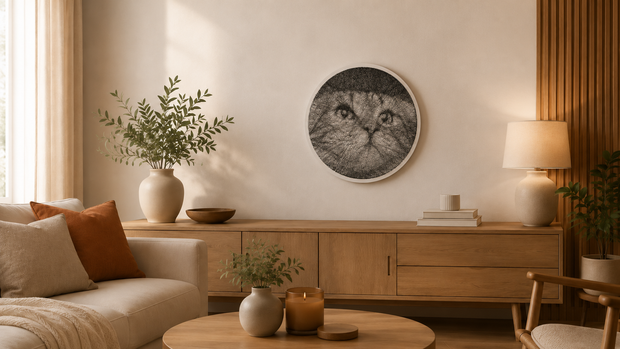
Finishing a string art portrait is a satisfying moment. After carefully guiding the thread from nail to nail, you finally see a meaningful photograph transformed into a handmade piece of art.
But completing the project is only the beginning. The way you display it determines whether it simply remains a finished craft project or becomes an integral part of your home.
Thoughtfully positioned string art décor can bring personality, texture, and warmth to a room. Whether you have created a detailed string art portrait or a lighter, ring-shaped string art model, the right location can turn it into a focal point connected to a person, place, or memory that matters to you.
Here are seven practical string art display ideas to help your finished artwork feel at home in your interior.
1. Create a Feature Wall in the Living Room
The living room is one of the best places to display a distinctive piece of string art wall décor. It is usually the room where family members spend the most time and where visitors naturally notice the objects that reflect your personality.
A large string art portrait can become a focal point when placed:
- Above a sofa
- Over a console table
- Above a sideboard
- On an otherwise empty accent wall
- Between two matching wall lights
Scale is especially important. An artwork that is too small may appear disconnected from a large sofa or sideboard. As a general styling principle, the piece or overall arrangement should occupy a substantial portion of the furniture width without extending beyond it.
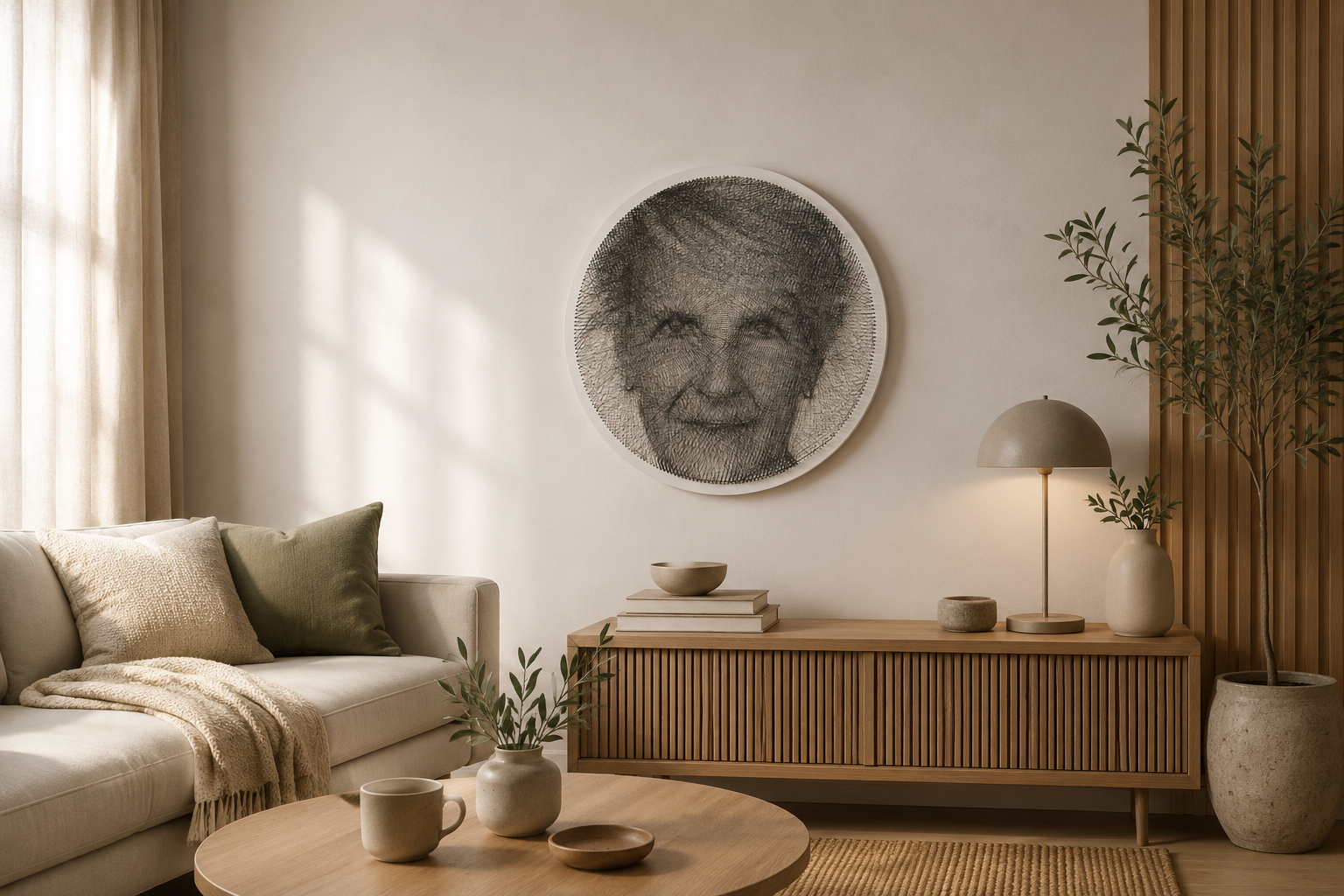
Avoid placing the artwork too close to the ceiling or directly against other decorative objects. Leaving sufficient empty space around it gives the design room to breathe and allows the detailed thread pattern to remain visually clear.
For a balanced result, position the centre of the artwork approximately at eye level. When hanging it above furniture, leave enough distance that it feels connected to the furniture but not crowded by it.
A string art piece works particularly well in a modern living room because its handcrafted texture creates an appealing contrast with smooth surfaces, simple furniture, and clean architectural lines.

2. Display It in the Bedroom
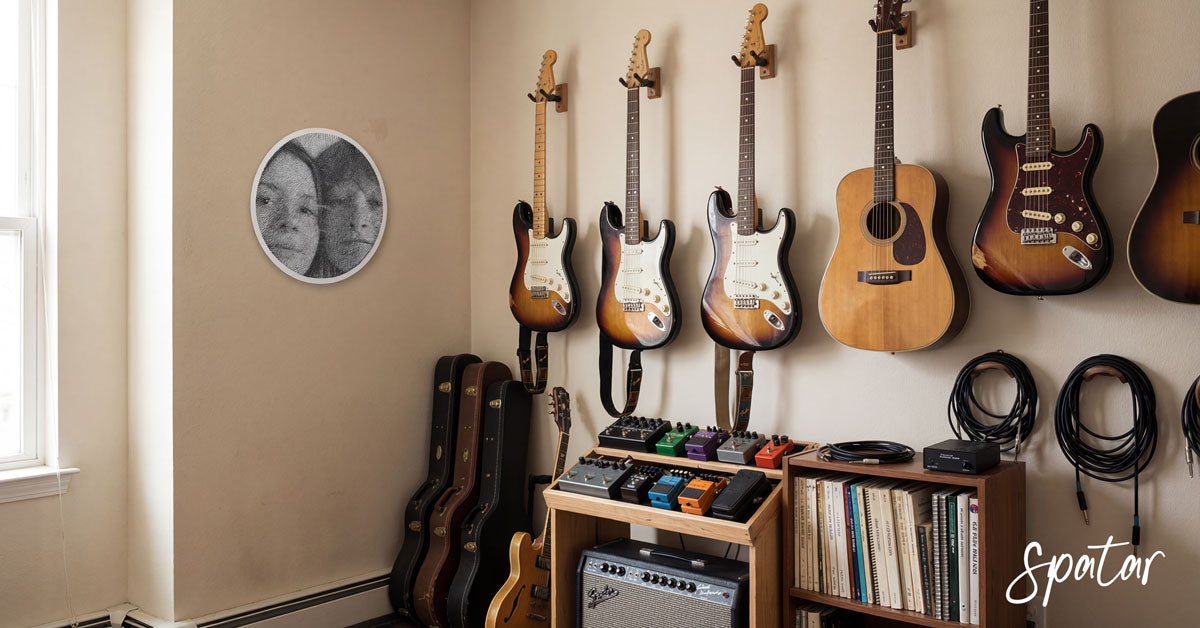
A bedroom should feel personal, calm, and emotionally meaningful. This makes it an ideal setting for a string art portrait based on a couple’s photograph, wedding image, family moment, or another important memory.
Instead of using generic prints, personalized artwork can make the room feel more closely connected to the people who use it.
Consider placing your string art:
- Above a dresser or chest of drawers
- On the wall beside the bed
- Opposite the bed, where it can be seen easily
- On a quiet wall near a reading chair
- As part of a small arrangement with personal photographs
Although artwork is often placed above the headboard, make sure it can be mounted securely. A lighter location above a dresser or on an adjacent wall may be more practical and can make the portrait easier to appreciate.
Neutral walls in white, cream, beige, warm grey, or muted natural colours provide a calm background for detailed personalized wall art. Soft bedside lamps and warm indirect lighting can also highlight the texture of the threads without making the room feel too bright.
Choose a photograph with an emotional connection rather than selecting an image only because it matches the room. The purpose of personalized interior decoration is to make the space feel like your own.
3. Add It to a Gallery Wall
A gallery wall allows you to combine different memories, artistic formats, and decorative objects in one carefully planned composition.
String art adds depth and texture to a gallery wall because it differs from flat photographs and printed posters. It can act as the central piece, with smaller objects arranged around it, or as one element in a more varied collection.
You can combine it with:
- Framed family photographs
- Travel pictures
- Illustrations or graphic prints
- Small mirrors
- Postcards or handwritten notes
- Decorative plates
- Small wall-mounted objects
Before fixing anything to the wall, arrange the entire composition on the floor. This makes it easier to test different layouts without drilling unnecessary holes.
Try to maintain consistent spacing between the individual pieces. A gap of approximately five to ten centimetres often works well, although the ideal distance depends on the dimensions of the artwork and the available wall space.
Frame colours do not have to match perfectly, but they should feel visually connected. Black, white, light wood, or one repeated accent colour can help unite the composition.
Because string art already contains intricate lines, avoid surrounding it with too many equally detailed objects. A mixture of simple and complex pieces creates a calmer, more balanced gallery wall.
4. Use It as Meaningful Hallway Décor
Hallways and entrance areas are often treated as purely functional spaces. However, they are also the first parts of the home that guests see.
A piece of handmade wall decoration can make an entrance feel warmer and more personal. It immediately communicates that the home belongs to real people with their own stories and memories.
Suitable images for hallway string art include:
- A family portrait
- A photograph of a much-loved pet
- A memorable travel picture
- A wedding or anniversary photograph
- A portrait connected to a special family occasion
In a narrow hallway, a string art ring can be especially effective because its open centre and lighter visual structure do not make the wall feel heavy. A solid circular portrait creates a stronger focal point and may work better above a hallway bench, shoe cabinet, or console.
Keep the depth of the artwork in mind when placing it in a narrow passage. Position it where people, bags, or coats are unlikely to brush against the threads.
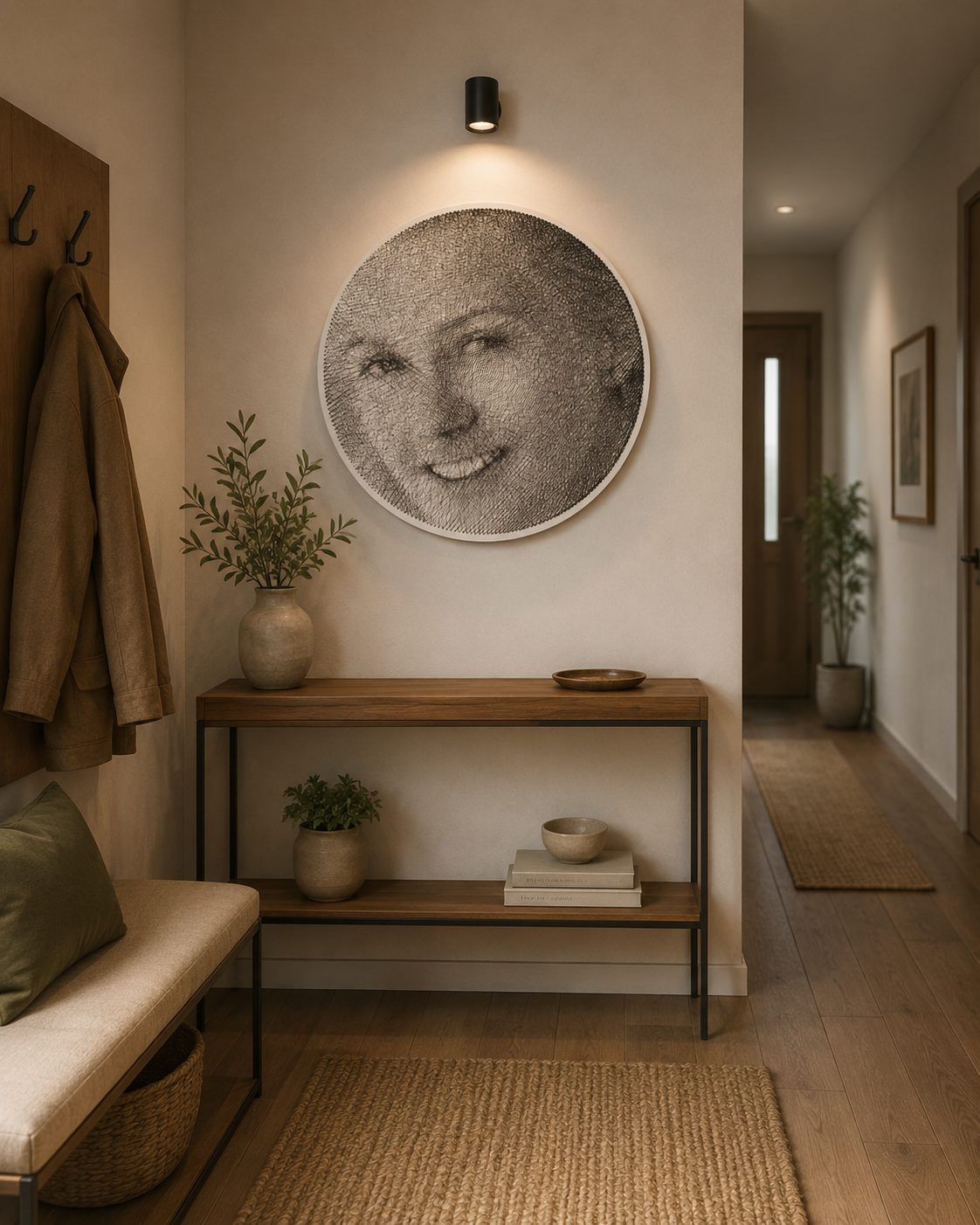
For a welcoming arrangement, combine the artwork with a mirror, a small lamp, or a simple bowl for keys. Avoid adding too many accessories, as entrance areas can quickly begin to look cluttered.
5. Decorate a Child’s or Teenager’s Room
A child’s or teenager’s room is a space for identity, interests, and personal memories. String art can display something more individual than mass-produced children’s wall décor.
The artwork could be based on:
- A favourite photograph
- A family pet
- A sports or hobby-related image
- A holiday memory
- A picture with friends or siblings
- A meaningful childhood moment
When a young person completes a DIY string art kit personally, the finished artwork carries an additional meaning. It is not only decoration but also evidence of patience, concentration, and creativity.
Displaying the completed project prominently can give the child or teenager a genuine sense of achievement. It shows that their creative work deserves a place in the room rather than being stored away after completion.
Place the artwork above a desk, dresser, reading corner, or low storage unit. Make sure it is mounted securely and positioned where it will not be regularly touched or knocked.
As the room changes over time, the string art can become part of a larger collection of photographs, posters, and personal objects. This makes it a flexible element of DIY home décor rather than a temporary children’s craft.
6. Place It on a Shelf or Sideboard
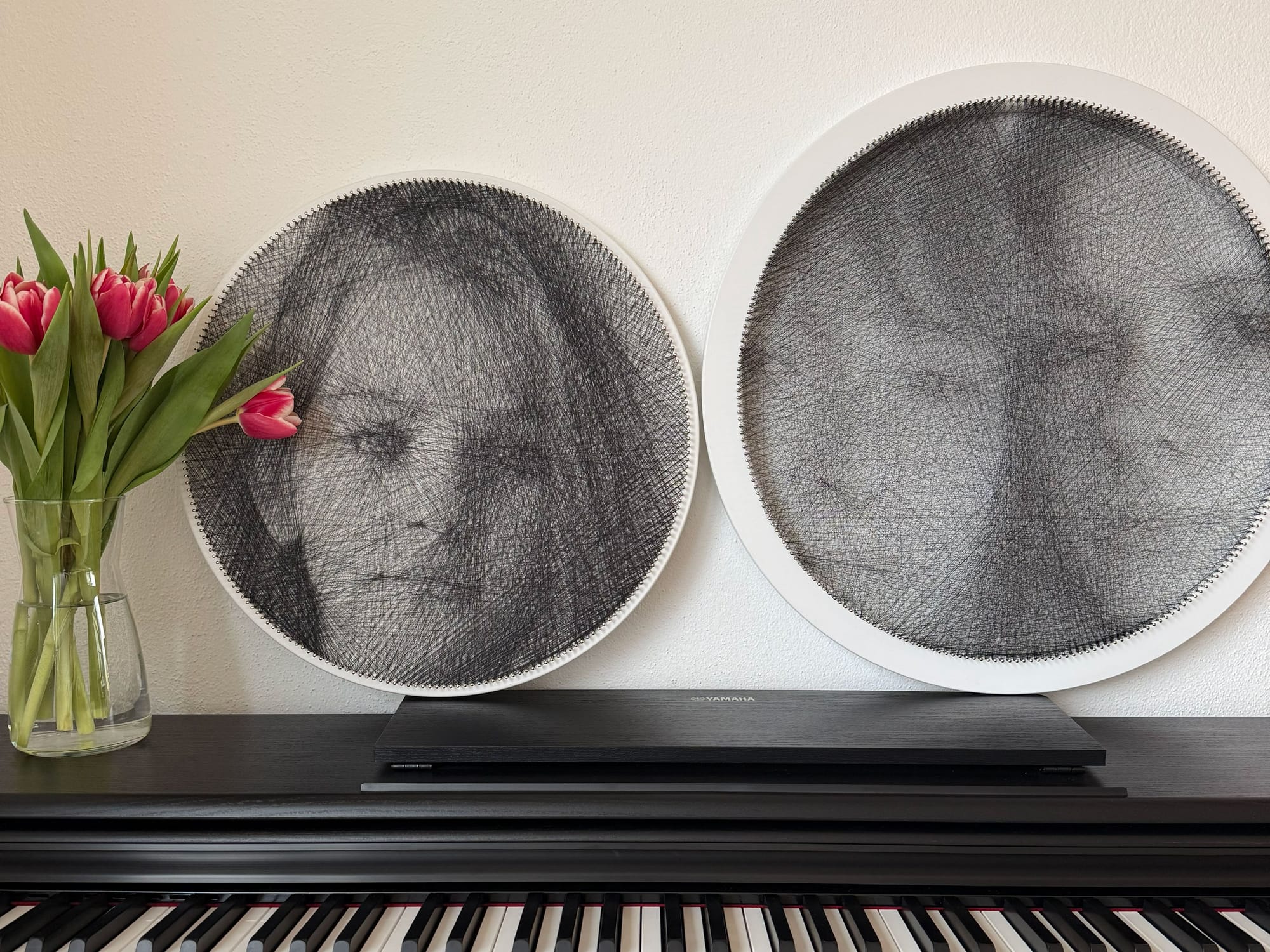
Not every piece of artwork needs to be permanently attached to a wall. Leaning string art against the wall on a deep shelf, mantel, console, or sideboard creates a relaxed, contemporary look.
This approach is particularly useful when:
- You live in a rented home
- You prefer not to drill into the wall
- You regularly rearrange your interior
- You are still deciding on the final location
- You enjoy layered decorative arrangements
Position the artwork securely so that it cannot slide or fall. Depending on the design and its support, a small display stand may provide additional stability.
Combine it with a limited number of decorative objects, such as books, plants, candles, ceramic pieces, or a small table lamp. Varying the height of the objects makes the composition feel more natural.
For example, place the string art at the back, add two or three books in front of one side, and balance the arrangement with a small plant on the other. Avoid covering too much of the thread pattern.
This is one of the most flexible answers to how to display string art, especially for people who enjoy refreshing their interiors throughout the year.
7. Turn It into a Personalized Gift Display
String art made from a personal photograph can become a thoughtful gift for someone who values memories more than conventional decorative objects.
Suitable occasions include:
- Birthdays
- Weddings
- Anniversaries
- Housewarmings
- Christmas
- Mother’s Day or Father’s Day
- The arrival of a new family member
A wedding photo can become meaningful décor for a couple’s first home. A portrait of a family pet can be displayed in a living room or hallway. A family photograph can create an emotional gift for parents or grandparents.
The recipient can also become part of the creative process by completing the DIY project personally. In this case, the gift includes both the final artwork and the experience of making it.
When presenting the finished piece, consider how it could fit into the recipient’s home. Neutral board and thread colours are usually easier to integrate into different interiors, while a distinctive colour combination can be selected when you know the recipient’s style well.
Unlike many temporary gifts, personalized string art can remain part of the home for years because it is connected to a specific person, relationship, or memory.
 Peter Spatar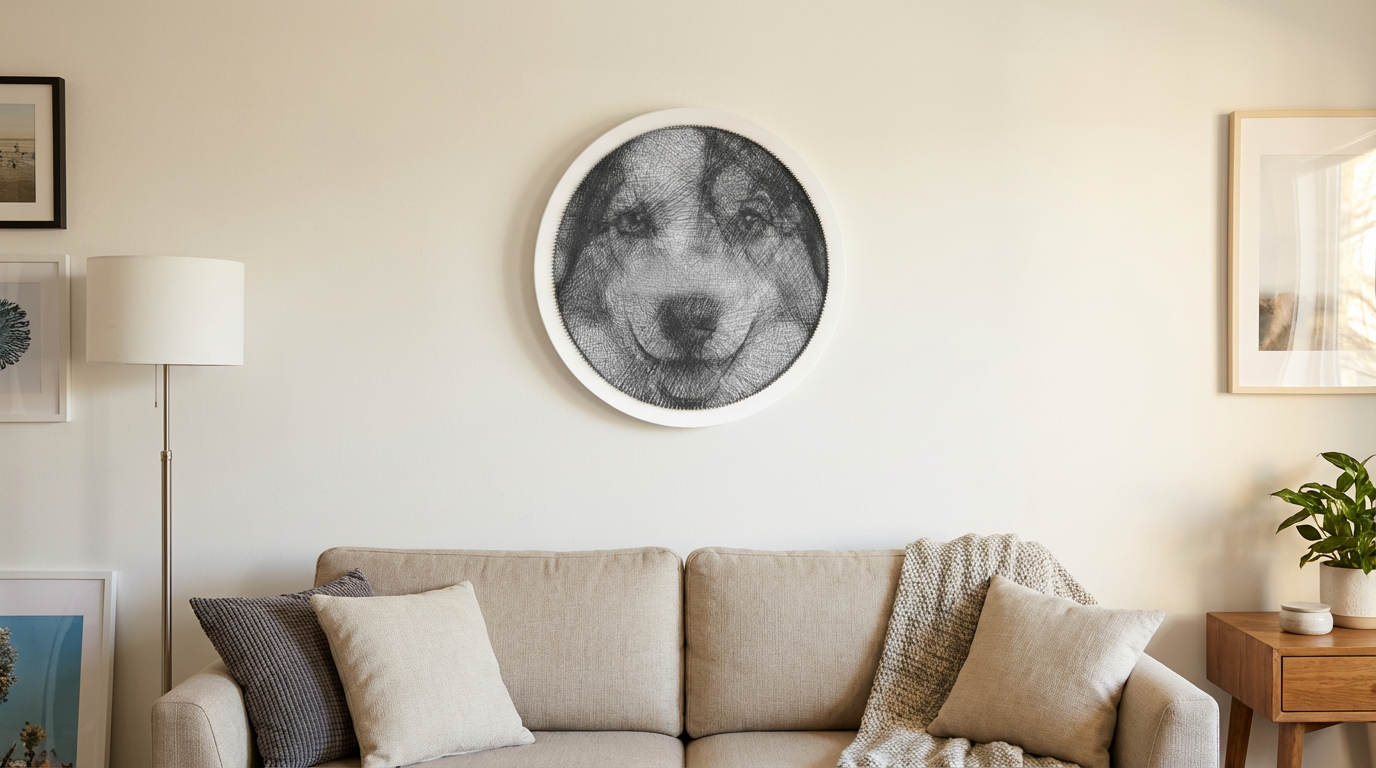
How to Make String Art Fit Your Interior
Good placement can make handmade artwork look intentional and sophisticated. Before hanging your piece, consider the wall colour, lighting, furniture proportions, and the amount of visual detail already present in the room.
Choose a Wall with Sufficient Contrast
The outline and thread pattern should remain easy to see from a normal viewing distance. Light artwork usually stands out more clearly against a darker or coloured wall, while dark thread creates strong contrast on a light background.
If the wall and artwork are very similar in tone, the piece may blend into the room more than intended.
Coordinate the Thread and Board Colours
The colours do not need to match every object in the room. Instead, look for a visual connection with one or two existing elements, such as the furniture, curtains, cushions, rug, or picture frames.
Black, white, natural wood, and other neutral tones are especially versatile. They make it easier to combine modern handmade décor with changing accessories and seasonal colours.
Select an Appropriate Size
Measure the available wall area and the furniture below it before choosing your artwork.
A small design can be effective on a narrow wall or as part of a gallery arrangement. A larger portrait is better suited to becoming the main focal point above a sofa, sideboard, or dresser.
Use paper or masking tape to mark the artwork dimensions on the wall. This simple step helps you understand how the scale will feel before placing an order or installing the finished piece.
Use Warm, Neutral Lighting
Soft, warm lighting reveals the texture of the threads and creates gentle shadows around the nails. A nearby floor lamp, table lamp, or adjustable wall light can make the artwork more noticeable in the evening.
Avoid extremely bright spotlights that create glare or overly dramatic shadows.
Avoid Overcrowded Walls
String art contains many fine lines and visual details. It usually looks best when given enough empty space.
When the surrounding wall is already filled with shelves, posters, photographs, and decorations, consider moving some elements or selecting a quieter location.
Combine Handmade Décor with Modern Furniture
Handmade objects do not require a rustic interior. String art can provide warmth and individuality in rooms with minimalist furniture, clean surfaces, and contemporary materials.
The contrast between precise geometric thread patterns and modern furniture is one reason string art works well in Scandinavian, contemporary, industrial, and minimalist interiors.
Protect the Artwork
Keep the piece away from excessive moisture, steam, and persistent direct sunlight. Bathrooms and very humid kitchens are generally unsuitable locations.
Direct sunlight may gradually affect the thread or board colours. A dry interior wall with stable lighting conditions is usually the safest choice.
Circle or Ring: Which Shape Works Best?
A solid circular string art portrait creates a strong visual focal point. Because the image fills the entire form, it has greater visual weight and can confidently occupy a central position above a sofa, dresser, or sideboard.
A string art ring feels lighter and more minimalistic. Its open centre allows more of the wall to remain visible, helping the artwork blend naturally into the surrounding space.
A ring-shaped design works especially well in:
- Modern interiors
- Scandinavian rooms
- Minimalist spaces
- Contemporary homes
- Smaller rooms where a lighter composition is preferable
The best choice depends on the available wall space, the proportions of nearby furniture, and the visual style of the room. A solid circle makes a stronger statement, while a ring creates a more open and airy effect.
 Peter Spatar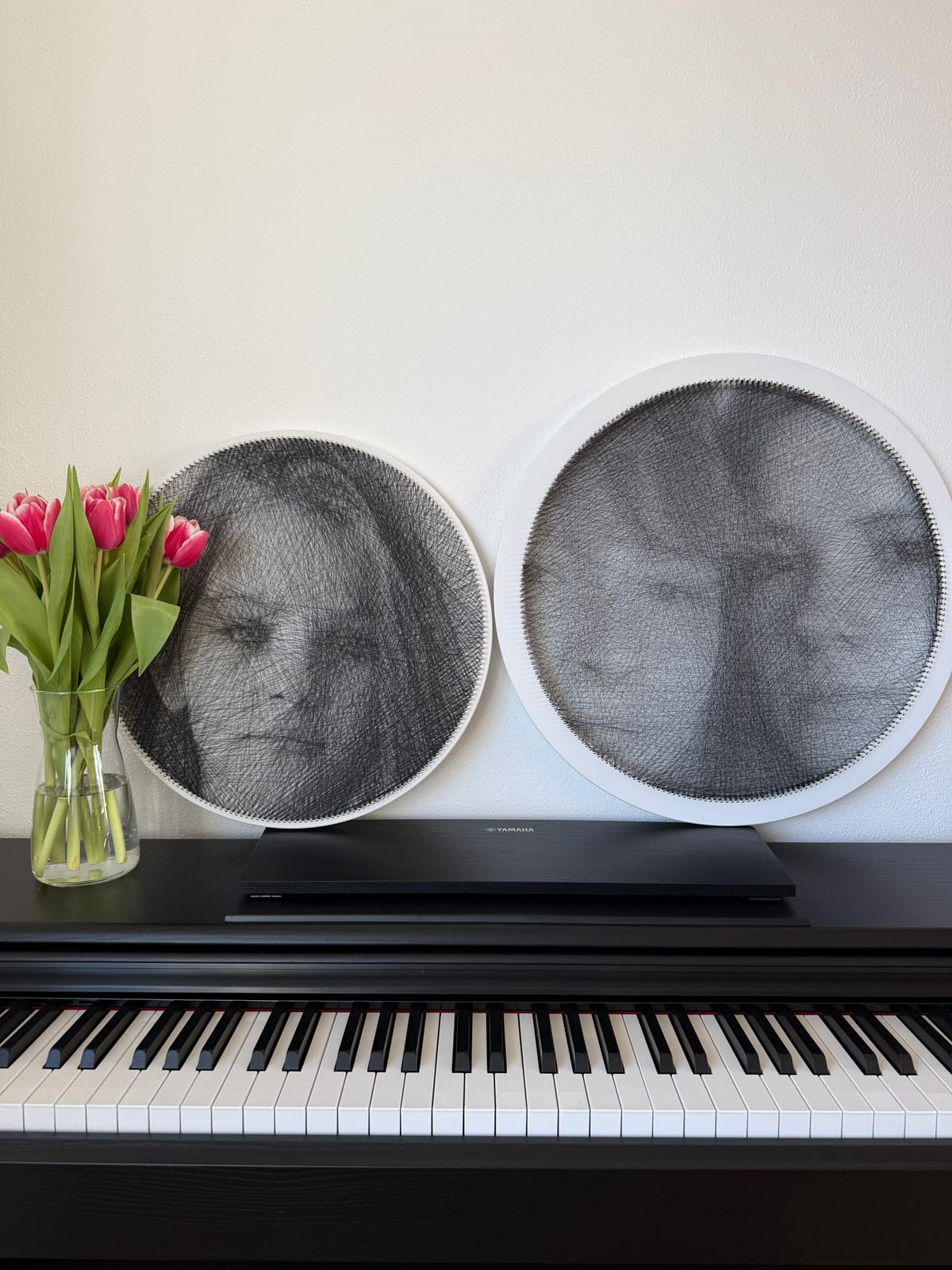
Frequently Asked Questions
Where is the best place to hang string art?
The best location is a dry interior wall where the artwork can be seen clearly and has enough empty space around it. Living rooms, bedrooms, hallways, home offices, and children’s rooms are all suitable options.
Can string art be displayed without drilling?
Yes. Depending on its size and weight, it can be placed on a suitable display stand or leaned securely against a wall on a deep shelf, console table, or sideboard. Always ensure that it cannot slide or fall.
How do I choose the right size for my wall?
Measure both the available wall space and the furniture beneath it. Mark the planned dimensions using paper or masking tape. This will help you see whether the piece feels balanced before you hang it or choose a kit.
Does string art suit modern interiors?
Yes. Its geometric structure, limited colour palette, and handcrafted texture work particularly well with modern, Scandinavian, minimalist, industrial, and contemporary furniture. It adds personality without requiring a traditional or rustic setting.
Give Your Finished String Art a Meaningful Place
String art is more than a DIY project completed one thread at a time. It is a personal interior object created from a photograph, relationship, place, or memory that matters to you.
Whether you display it above a sofa, incorporate it into a gallery wall, place it in a child’s room, or give it as a personalized gift, thoughtful styling helps it become a lasting part of the home.
Explore the DIY String Art Kits available on Spatar.de and create a personalized piece that connects your creativity with a meaningful image from your own life.